
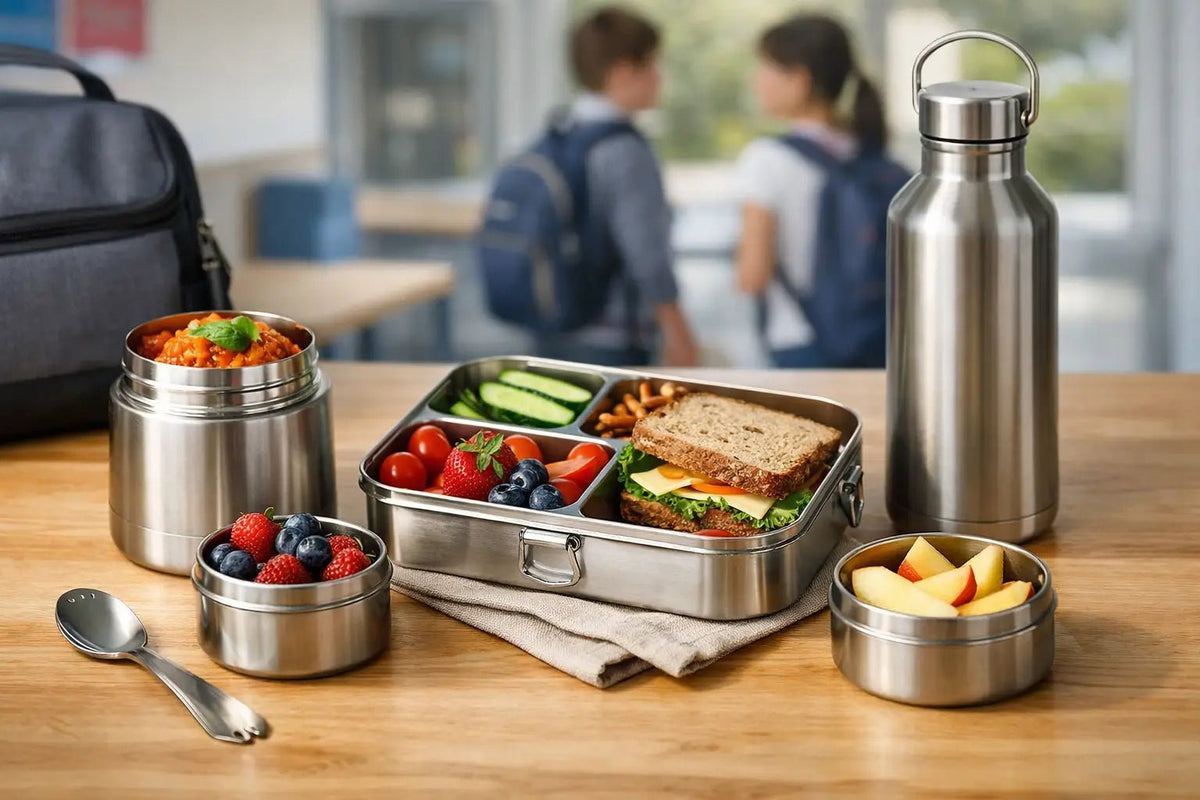
A school bag is a tough test for any lunch setup. It gets tipped, dropped, shoved into a locker and carried home in the afternoon sun. The best school lunch accessories are not extra bits to buy for the sake of it. They are the practical pieces that prevent soggy food, lost lids and drink bottle leaks, while helping children open and pack their lunches independently.
For busy families, fewer well-chosen accessories usually work better than a drawer full of mismatched containers. Start with what your child actually eats, how long their lunch sits before break time and how confidently they can manage lids, seals and bottles on their own.
Start with the lunchbox, then fill the gaps
A quality stainless steel lunchbox is the foundation. It gives food a protected place in a school bag, avoids the short replacement cycle of flimsy containers and is easy to wash after a full day of use. Compartments are especially useful for children who prefer foods separated, such as crackers away from fruit or carrot sticks away from a sandwich.
The right size matters more than having the biggest box. A younger child may need a compact lunchbox that feels manageable in small hands and leaves room in their bag. Older children, growth spurts and sport days often call for more capacity. Think about the food you pack on an ordinary school day, not the oversized lunch you make once a term.
If you regularly send yoghurt, dips, berries or leftover pasta, choose a lunchbox or container with a properly fitted, leakproof seal. “Leak resistant” can be fine for dry snacks, but it is not the same as leakproof when lunch is rolling around beside library books and a school jumper.
The school lunch accessories worth having
A leakproof snack container for wet foods
A small leakproof container earns its place quickly. It keeps hummus with vegetable sticks, yoghurt with fruit, or a small portion of leftovers contained without soaking the rest of lunch. It also lets you pack variety without relying on single-use packaging.
Look for a container that is straightforward to open and close. A seal only helps if your child can use it without needing an adult at school. At home, ask them to fill it with water, close it and turn it upside down over the sink. It is a simple confidence check before it goes into their bag.
A drink bottle that suits their day
A dependable drink bottle is one of the most-used school lunch accessories. The best option is not necessarily the largest one. It should hold enough water for the school day, fit in the bag’s bottle pocket and be easy for your child to drink from and refill.
Stainless steel is a durable choice for daily use, particularly for children who are hard on their gear. Check the lid and seal as carefully as the bottle itself, as these are the parts that do the work against leaks. A wide opening can make cleaning easier, while an insulated bottle may be worthwhile for warm weather or long summer sports days. The trade-off is extra weight, so it depends on your child’s age and how much they carry.
A separate container for crunchy snacks
Not every food belongs in the main lunchbox. A dedicated snack box is useful for dry foods such as popcorn, crackers, cheese cubes or trail mix. It gives children an easy option for morning tea and prevents a larger lunch container being opened, rummaged through and left half closed.
A small stainless steel snack box can also make portions feel less overwhelming for young eaters. Pack a familiar food alongside something new, rather than turning morning tea into a challenge. The goal is a lunch routine that gets eaten, not a perfectly styled box that returns home untouched.
An insulated food container for warm lunches
For children who enjoy soup, pasta, rice dishes or leftovers, an insulated food container can bring much-needed variety to the school week. It is especially handy in winter, when a warm lunch can feel more satisfying than another sandwich.
Temperature performance depends on how you use it. Preheat the container with hot water for a few minutes, empty it, then add properly heated food and close the lid firmly. It is not a substitute for food safety habits, so avoid packing foods that have been sitting around too long. Choose a size your child can finish, and practise opening the lid before school.
Reusable cutlery and a small napkin
These are simple additions, but they stop awkward lunches. A compact reusable fork or spoon is useful for yoghurt, salads, rice and pasta, while a washable cloth napkin deals with spills without adding another disposable item to the day.
Keep cutlery purposeful. If your child mostly eats finger food, there is no need to pack it every day. But when the menu calls for it, a dedicated set means you are not searching through the kitchen drawer at 7.45 am.
How to choose accessories that children can manage
The most carefully packed lunch is less useful if a child cannot open it. Before buying, consider grip, lid tension, clip placement and whether the container needs two hands. Younger children often do best with uncomplicated shapes and closures they can practise repeatedly.
A good rule is to run a home test. Ask your child to open every item, take out the food, close it again and put it into their school bag. If a lid is frustrating on the bench, it will be harder at a noisy lunch table. This test also shows whether an accessory is genuinely useful or simply another item to keep track of.
It is worth having a spare seal or replacement part where available, especially for the drink bottle used every day. This can extend the life of a quality product and avoids replacing an entire item because of one worn component. Durable 304-grade stainless steel is designed for long-term use, but lids, seals and moving parts still deserve regular checks.
Build a lunch system, not a collection
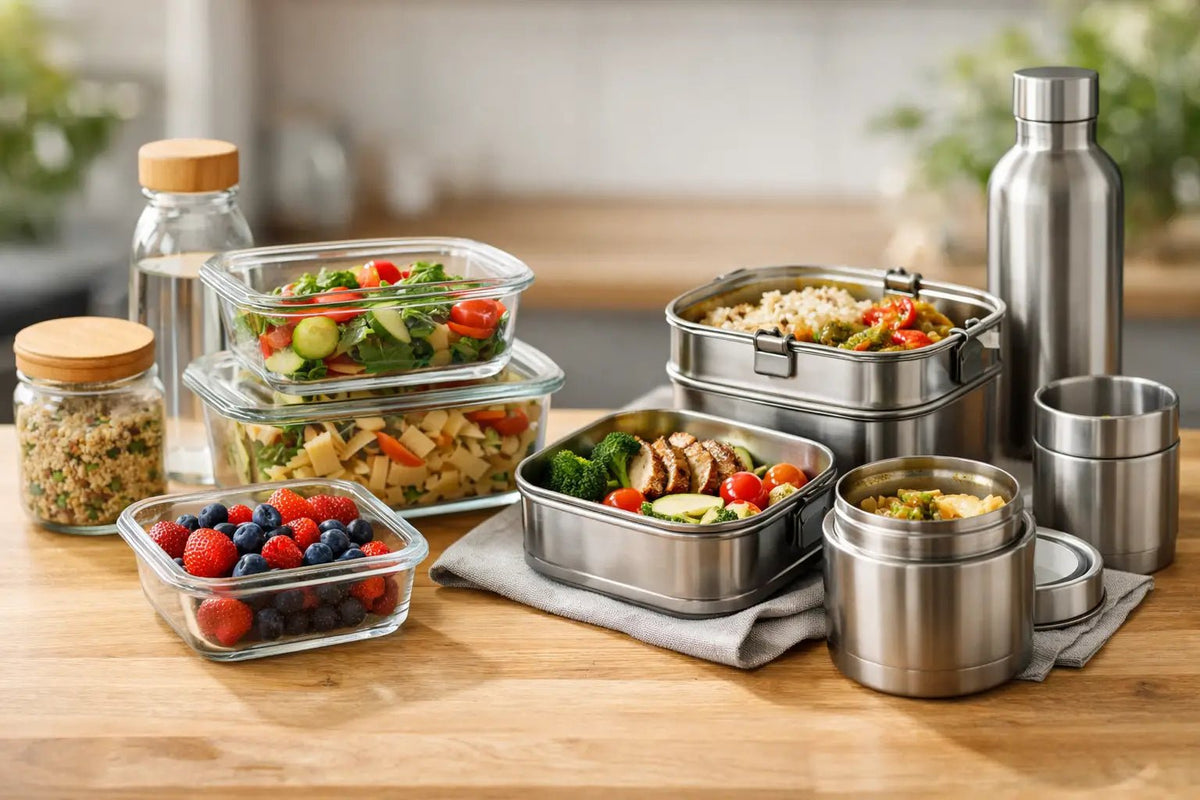
The easiest school lunch routine has a clear place for each job: a main lunchbox for the meal, a small leakproof container for wet foods, a drink bottle, and perhaps a snack box or insulated container when the menu needs it. This keeps packing fast and makes washing up predictable.
Avoid doubling up on accessories with the same role. Two different snack boxes can seem handy, yet they may create more decisions, missing lids and clutter. Add an item only when it solves a repeated problem: yoghurt leaking, food getting squashed, children not drinking enough water, or lunches coming home uneaten because there is too little variety.
Meals In Steel focuses on stainless steel lunch solutions built for the real conditions of Kiwi school bags, with reliable performance and a three-year warranty for extra confidence. That long-term approach matters when lunch gear is used five days a week, term after term.
Care that keeps accessories working properly
Stainless steel is low-maintenance, but a few habits make a difference. Wash containers soon after use, especially after dairy, sauces or strongly flavoured foods. Let every part dry fully before storing it, and remove seals occasionally if the design allows so crumbs and moisture do not build up underneath.
For leakproof items, inspect seals when you wash them. If a seal is twisted, cracked or not sitting flat, it may not perform as intended. Avoid forcing lids closed over overfilled containers, as this can compromise the seal and make it difficult for children to open later.
The right accessories should make school mornings calmer, not more complicated. Choose a small set that suits your child’s food, fits their bag and can handle everyday knocks. Once the system works, packing lunch becomes one less thing to think about before the school bell.


Leave a comment
This site is protected by hCaptcha and the hCaptcha Privacy Policy and Terms of Service apply.