
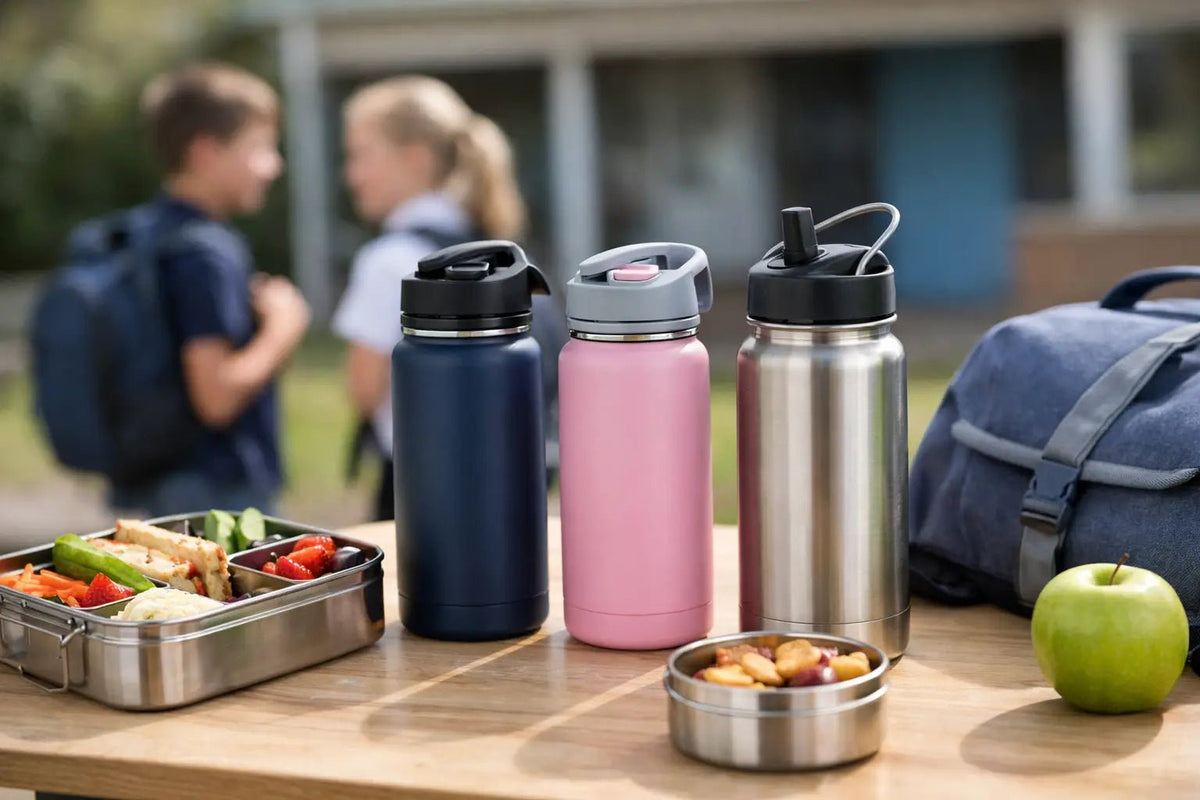
By week three of term, most parents know whether a drink bottle is actually any good. If it is leaking into the school bag, hard to open, or coming home with yesterday’s smell still stuck in it, it is not doing its job. This kids' drink bottle review looks at what really matters in daily use so you can choose a bottle that works for school, sport and everything in between.
A good kids' bottle is not just about looks or a trendy colour. It needs to survive being dropped on concrete, tossed into a school bag, left in the car, and opened by small hands without a struggle. It also needs to be easy enough to clean properly, because anything that is fiddly tends to get pushed to the back of the sink and ignored.
What matters most in a kids' drink bottle review
Parents usually start with one question - will it leak? Fair enough. A bottle that soaks lunchboxes, library books or spare clothes is an instant no. But leakproof performance is only one part of the picture.
The best drink bottles for kids get the basics right across the board. They seal properly, feel sturdy, and make sense for the age of the child using them. A preschooler and a Year 6 student often need different things. Younger kids usually do better with simple lids and lighter bottles, while older children can handle larger capacities and sport-style tops.
Material matters too. Stainless steel stands out because it is durable, long-lasting and does not hold flavours the way some lower-quality materials can. If your child alternates between water and milk-based drinks, that becomes a practical advantage very quickly. It also helps if you are trying to reduce reliance on short-life plastic products that crack, stain or need replacing too often.
Kids' drink bottle review: the features worth paying for
Not every feature is worth the extra cost, but some absolutely are.
Leakproof design is at the top of the list. A proper seal should hold even when the bottle is rolling around sideways in a school bag. This is especially important if the bottle is packed next to books, worksheets or a lunch bag. Look closely at how the lid closes and whether the seal feels secure rather than flimsy.
Durability comes next. Stainless steel bodies tend to handle rough treatment better than many alternatives, particularly for school-aged children who are not exactly gentle with their gear. Dents can still happen, especially if a bottle takes a hard knock, but a well-made stainless steel bottle will generally outlast cheaper options that split, warp or stop sealing properly.
Ease of cleaning is another big one. Wide-mouth bottles are often easier to wash thoroughly, dry properly and refill quickly in the morning rush. Narrow openings can be fine for older kids who prefer sipping, but they are usually more annoying to clean. If a bottle cannot be cleaned without special tools or a lot of patience, it will become a problem.
Then there is size. Bigger is not always better. A large bottle sounds useful until it is too heavy for a small child to carry, or too tall to fit comfortably in a lunch bag or side pocket. For most school days, the right capacity depends on your child’s age, how often they can refill it, and whether they also take water to sport after school.
Stainless steel versus other options
If you have bought a few bottles over the years, you have probably already noticed that some materials age better than others. Stainless steel is popular for a reason. It is strong, reliable, and well suited to everyday use where bottles get dropped, bumped and used constantly.
Another benefit is longevity. A good stainless steel bottle can stay in use for years rather than months, which often makes the higher upfront cost worthwhile. For families packing lunches every day, replacing bottles less often is not just better value. It also means fewer last-minute school morning dramas.
That said, not every stainless steel bottle is automatically the best choice. Build quality still varies. Lid design, sealing performance, weight and finish all matter. Some are beautifully made but too heavy for younger children. Others are light and practical but not insulated, which may or may not matter depending on how your child uses it.
How to match the bottle to your child
The most useful kids' drink bottle review is one that considers the child, not just the bottle.
For younger children, simplicity wins. A bottle should be easy to open, easy to close and easy to drink from without squeezing too hard or tipping awkwardly. Complicated spouts and tricky locking systems often sound clever but can be frustrating in real life.
For primary school kids, reliability matters more than novelty. If they can manage the lid themselves, carry it without fuss and put it back in their bag without leaking, that is a much better result than choosing something based on appearance alone. School routines are repetitive, so the bottle needs to support that routine rather than create extra work.
For active kids, capacity and grip can matter more. A child heading from school to sport may need a larger bottle or one that keeps water cooler for longer. If they are running between activities, a secure lid and solid carry handle become more valuable than a slim design.
Common problems parents run into
One of the biggest issues is choosing based on looks first. Kids are naturally drawn to bright designs, but if the bottle is awkward to use or leaks after a few weeks, the novelty disappears fast.
Another common problem is buying a bottle that is too complicated to maintain. Hidden seals, hard-to-reach spouts and lids with multiple moving parts can all become hygiene issues if they are not cleaned well. In a busy household, simple design is often the smarter option.
Fit is another overlooked detail. Some bottles are too wide for standard school bag pockets or too tall for lunch bags. It sounds minor until your child cannot carry it properly, or it keeps falling out on the walk to class.
Price can also be misleading. Very cheap bottles often cost more in the long run because they need replacing sooner. On the other hand, the most expensive bottle is not always necessary if your child mainly needs a dependable water bottle for school and occasional outings.
What a well-made bottle should feel like
You can tell a lot before the first school run. The lid should close firmly without feeling brittle. Threads should line up cleanly. The bottle should feel solid in the hand, not tinny or flimsy. If it rattles, flexes or has parts that seem easy to snap, that is usually a warning sign.
It should also feel practical. Can your child open it on their own? Can you clean it without a battle? Does it seem like something that will still be working halfway through the school year, not just in week one?
That is where trusted stainless steel products tend to stand apart. When they are designed for real family use, they do not need much fuss. They just work - day after day, lunch after lunch.
Our practical take on choosing well
If you are comparing options, start with four things: leakproof performance, easy cleaning, child-friendly design and durable materials. If a bottle gets those right, you are already close to a good decision.
A premium stainless steel drink bottle is often the safest bet for families who want long-term value and fewer replacements. It is especially worth considering if you are tired of broken lids, persistent smells or bottles that cannot cope with the school bag test. Meals In Steel has built its range around that exact kind of everyday performance, with products made for busy families who need reliability more than gimmicks.
There is still room for personal preference. Some kids like a straw top. Others do better with a simple screw lid or spout. Some need a compact bottle for younger hands, while others are better off with a larger size for full school days and after-school activities. The right choice depends on how the bottle will actually be used, not just how it looks on the shelf.
A good bottle should make mornings easier, not add another thing to troubleshoot. When it seals properly, washes easily and lasts through the rough and tumble of the term, you notice the difference straight away. And once you find one that does all that well, it is usually worth sticking with what works.


Leave a comment
This site is protected by hCaptcha and the hCaptcha Privacy Policy and Terms of Service apply.