

A lunchbox gets tested far more in a school bag than it ever does on a kitchen bench. It is tipped sideways, dropped at the gate, squeezed beside a drink bottle and left in the sun during sport. When comparing the best stainless steel lunchboxes NZ families can buy, the right choice is the one that keeps food contained, survives daily handling and is easy enough to use on a busy morning.
Stainless steel is a practical upgrade for households tired of replacing cracked containers and dealing with yoghurt or dressing in the bottom of a bag. A well-designed lunchbox helps reduce reliance on plastic while making packed lunches simpler, neater and more reliable.
What makes a stainless steel lunchbox worth buying?
The material matters, but the design matters just as much. Look for food-grade 304 stainless steel in the main container. It is durable, non-porous, easy to clean and does not retain food smells the way some containers can. It also looks good after years of use, rather than becoming cloudy or worn.
For families, the biggest benefit is longevity. A quality stainless steel lunchbox is made for the daily cycle of packing, carrying, washing and packing again. It should feel solid without being unnecessarily heavy, with smooth edges that are comfortable for children to handle.
Leakproof performance is the next non-negotiable. A lunchbox may have a stainless steel base, but it needs a properly fitted lid and seal to handle wetter foods. Silicone seals are commonly used to create that secure closure, so check the product details rather than assuming every compartment is suitable for every food. A leakproof lunchbox is ideal for hummus, berries, leftovers with sauce, yoghurt and salad dressing, but very runny foods can still be better carried in a dedicated sealed pot.
Best stainless steel lunchboxes NZ families should look for
There is no single best size or shape for every household. The best stainless steel lunchboxes NZ parents choose usually match the eater, the type of food being packed and the way the lunchbox travels each day.
For school lunches: divided bento-style containers
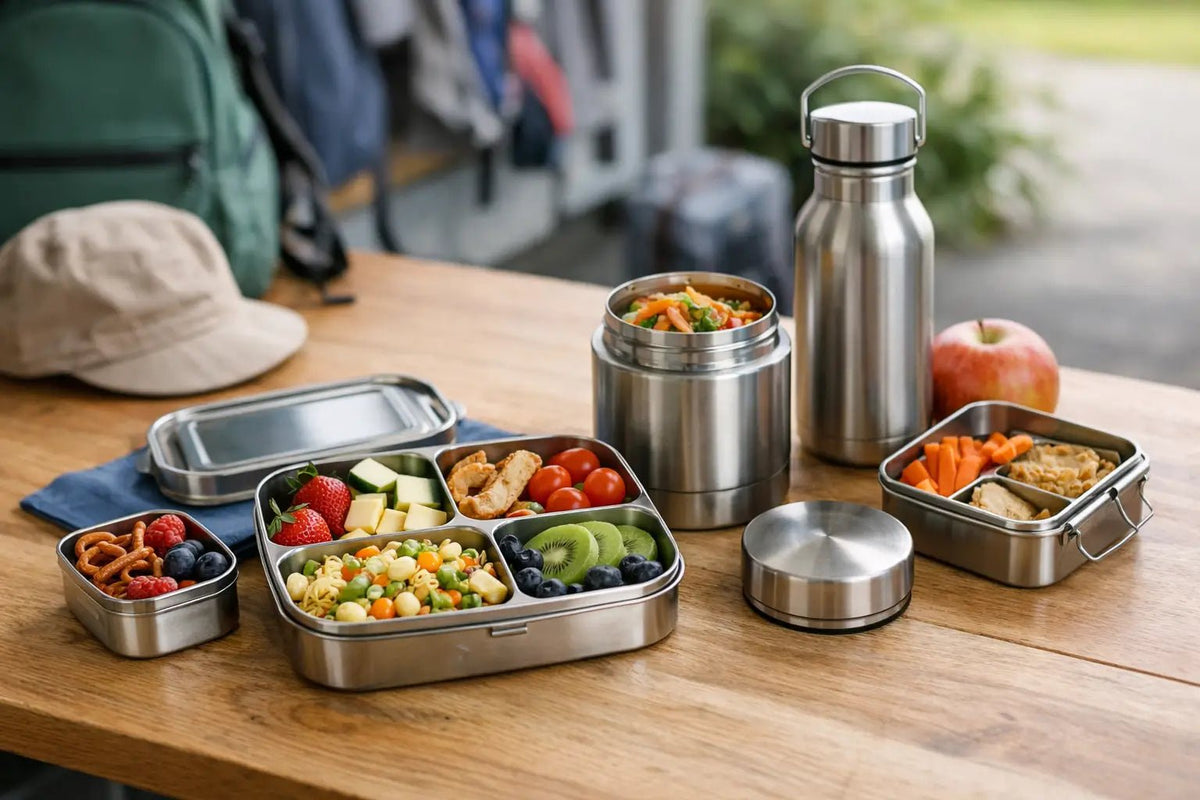
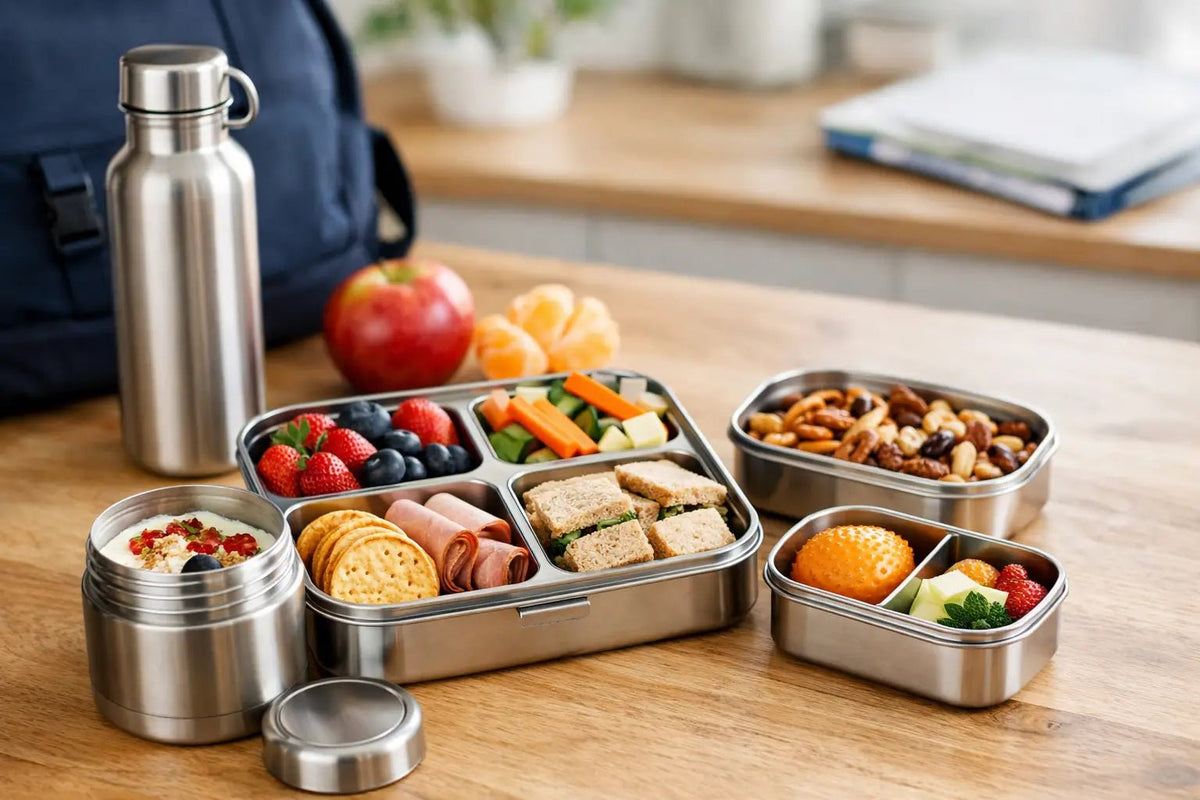
A divided stainless steel lunchbox is the everyday favourite for many school-aged children. Separate sections make it easy to pack a balanced mix of foods without using several small containers. Think a sandwich or wrap in the largest section, fruit and vegetables in another, then crackers, cheese or a small treat in the remaining spaces.
The key question is whether the lid seals each compartment individually. If it does, moist foods are less likely to wander into dry foods during the trip to school. If it does not, use the sections for dry items and add a small leakproof container for anything wet.
Choose a size that suits your child’s appetite rather than buying the largest option available. An oversized lunchbox can be awkward in a smaller school bag and may encourage too much packing. A roomy bento format is useful for older children and bigger appetites, while a compact version often works better for younger primary school children.
For work and meal prep: larger containers with a simple layout
Adults usually need more capacity and fewer compartments. A larger stainless steel lunch container gives you room for leftovers, grain bowls, salads, pasta or a generous sandwich with sides. A simple layout is often easier to fill, wash and repack when you are preparing several meals at once.
If you take lunch to the office, on the road or to a worksite, prioritise a secure lid and a shape that stacks neatly in the fridge. A container that fits easily into an insulated lunch bag is more useful than one that looks impressive but takes up all the space.
For snacks and small portions: compact snack boxes
Small stainless steel snack boxes earn their place quickly. They are handy for morning tea, sliced fruit, cheese and crackers, trail mix, baking or after-school snacks. They also help keep the main lunchbox less crowded.
For younger children, a compact box can make food more approachable. Rather than opening one large container, they can manage a small portion independently. That is a practical detail that can make the school day easier for children and teachers alike.
Check the seal before you check the colour
A lunchbox can have a lovely finish and still fail the real-world test if the seal is weak. Before choosing, look closely at how the lid closes. A good closure should sit evenly around the container and feel secure without requiring too much force from small hands.
Leakproof does not have to mean difficult to open. The best designs balance a firm seal with child-friendly clips or an easy-lift lid. If your child is new to the lunchbox, practise opening and closing it at home before the first school day. This quick check can prevent an untouched lunch simply because the lid felt too tricky.
Also consider how easy it is to clean. Removable seals can be useful because crumbs and moisture tend to collect around edges. Smooth stainless steel interiors are straightforward to wipe or wash, and a simple shape means fewer hidden corners after a rushed evening clean-up.
Choose the right size for the daily routine
Capacity is where many lunchbox purchases go wrong. The best option is not the biggest one. It is the one that holds a realistic lunch, fits the bag and does not leave you playing food Tetris at 7.45 each morning.
For a younger child, allow room for a main item, fruit, vegetables and one or two smaller snacks. For an older child, add capacity for a heartier main and extra food for sport or a longer day. If your family packs separate morning tea and lunch, two smaller containers may be more practical than one large box.
Think about the rest of the bag too. A lunchbox needs to sit alongside a drink bottle, library book, jersey and the occasional mystery item that appears at the bottom of a school bag. Measure the usable space if you are unsure, especially with structured backpacks.
Stainless steel does have trade-offs
Stainless steel lunchboxes are designed for durability, but they are not insulated. Cold foods should be packed with an ice pack in an insulated bag when needed, particularly through warmer New Zealand terms. Likewise, they are not a replacement for a thermos when you want hot food at lunchtime.
They can also show dents after a serious drop. That is usually cosmetic rather than a sign the lunchbox has stopped doing its job, but it is worth choosing a product built with everyday knocks in mind. Strong hinges, dependable clips and a well-fitted lid will matter more over time than decorative extras.
Compartment layouts can be limiting for some meals. Bento sections are excellent for variety, but less suited to a large serve of leftovers or a salad that needs tossing. Many families find the most flexible setup is one divided lunchbox for everyday school food, plus one or two sealed containers for wetter foods and larger meals.
Why local confidence matters
Buying from a New Zealand specialist means choosing products designed around the routines Kiwi families actually have: school lunches, weekend sport, road trips, office days and meal prep. It also makes it easier to get clear advice on size, care and leakproof use before you buy.
Meals In Steel focuses on premium 304-grade stainless steel food storage made for these daily demands, with a 3-year warranty and fast fulfilment from Auckland. Its 4.8-star customer rating reflects what matters most to busy households: products that perform consistently, not just on the first week of term but well beyond it.
The best lunchbox is the one your family reaches for without thinking. Choose a size that fits the appetite, a seal that suits the food you pack and a durable design that can handle the school bag test. That small decision can make every morning feel a little more organised.


Leave a comment
This site is protected by hCaptcha and the hCaptcha Privacy Policy and Terms of Service apply.