
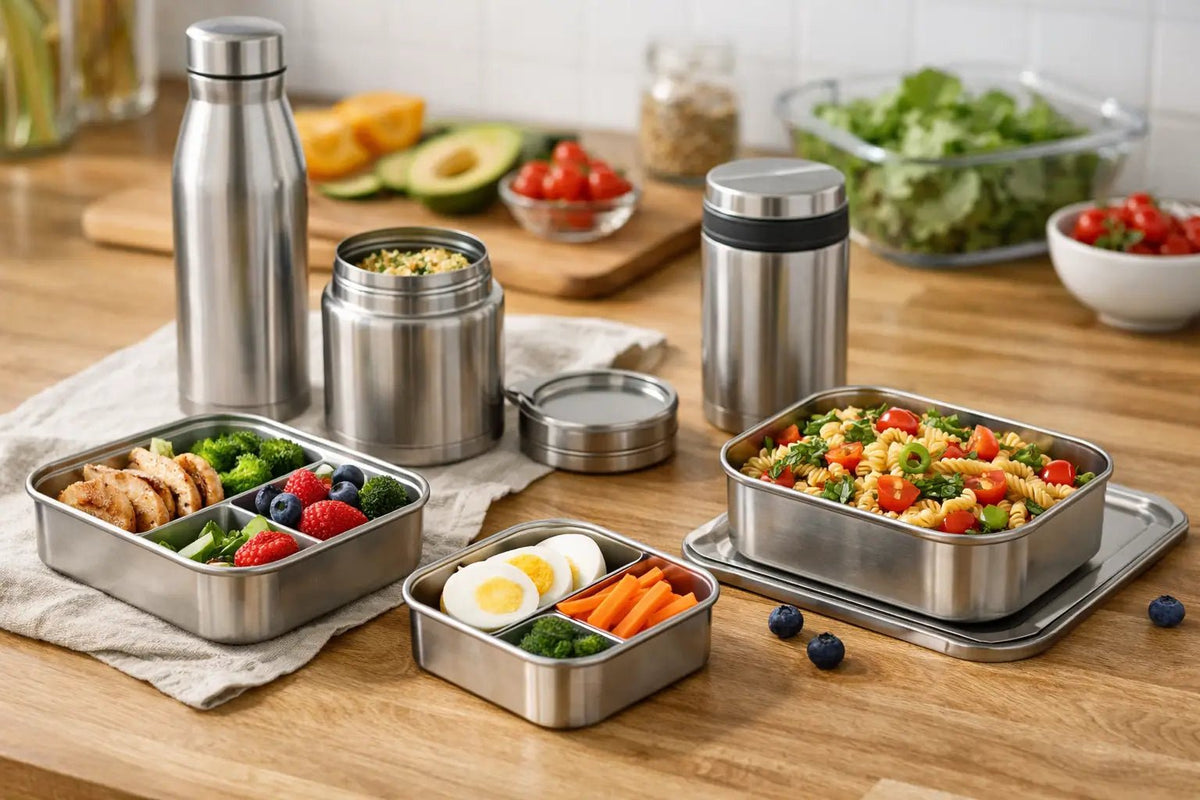
Sunday afternoon often starts with good intentions and ends with a crowded fridge full of mismatched containers, half-cut veg, and one mystery sauce leaking onto the shelf. A good guide to stainless steel meal prep fixes that quickly. With the right containers and a simple system, meal prep becomes easier to pack, easier to store, and much easier to keep using through busy school and work weeks.
Stainless steel works well for families because it is durable, low-fuss, and built for repeat use. If you are packing lunches every day, prepping dinners ahead, or portioning snacks for the week, the goal is not perfection. The goal is having containers that hold up, food that stays organised, and a routine you can actually keep going.
Why stainless steel makes meal prep simpler
The biggest advantage of stainless steel is reliability. Good-quality 304-grade stainless steel is made for everyday food use. It does not crack like cheaper materials can, and it handles the regular cycle of packing, unpacking, washing, and repacking without becoming a constant replacement job.
That matters in real households. School bags get dropped. Work lunches get stacked into shared fridges. Containers get packed in a rush before breakfast. A sturdy meal prep setup saves time because you are not dealing with broken clips, warped bases, or lids that stop fitting properly after a few months.
There is also the cleaning factor. Stainless steel is straightforward to wash and does not tend to hang onto food smells the way some containers can. If you prep things like curry, bolognese, roasted veg, or cut fruit through the same week, that makes a noticeable difference.
The trade-off is that stainless steel is not transparent, so you cannot always see what is inside at a glance. For some people, that means labelling containers or keeping a consistent shelf layout in the fridge helps.
A guide to stainless steel meal prep containers
Choosing the right container matters more than buying a huge set. Most people do better with a small group of useful shapes and sizes than a cupboard full of pieces they never reach for.
For full meals, larger rectangular or bento-style containers are usually the most practical. They make it easier to portion proteins, grains, pasta, or leftovers from dinner. If you like to prep lunches in complete portions, divided containers can help keep foods separate without needing multiple small tubs.
For snacks, sauces, and cut fruit, smaller containers earn their place fast. They are especially useful for school lunches where variety matters. A few compact stainless steel snack boxes can turn one prep session into several ready-to-pack lunch components.
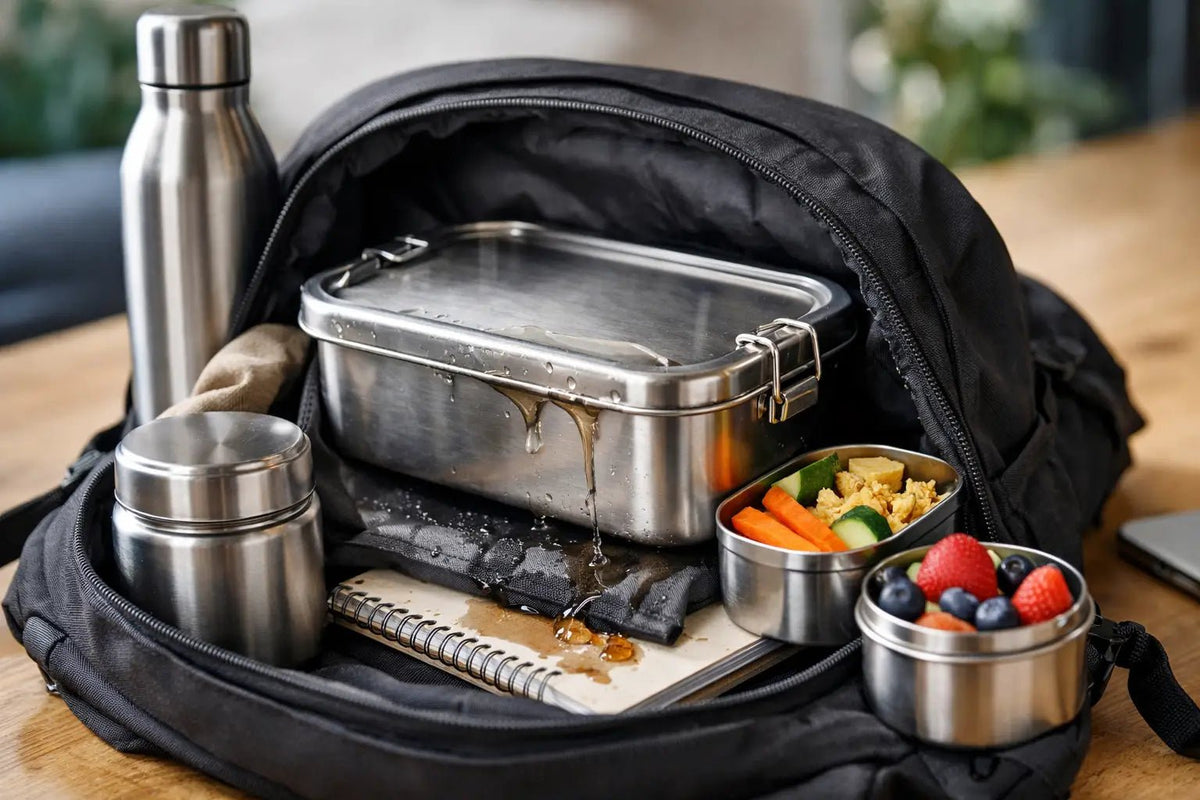
If you are prepping for transport rather than just fridge storage, leakproof design matters. This is where it pays to be selective. Not every stainless steel container is built the same way, and not every one is suited to yoghurt, dressings, or juicy fruit. Dry foods are forgiving. Saucy meals are not. If leaks will ruin your day, choose containers specifically designed for leakproof performance.
How to set up a meal prep system that lasts
The best meal prep system is boring in the best possible way. It should be simple enough that you can repeat it every week without overthinking it.
Start with three categories: full meals, lunchbox extras, and grab-and-go staples. Full meals might be pasta bake, fried rice, or leftover roast dinners portioned for work lunches. Lunchbox extras could be chopped veg, cheese cubes, fruit, or baking. Grab-and-go staples are the items that save you on rushed mornings, such as boiled eggs, washed berries, or pre-portioned crackers.
Once you know those categories, match them to the containers you actually need. This is where people often overbuy. If your household mostly needs school lunches and two office lunches a week, you probably do not need twelve oversized meal containers. A tighter set of reliable options is easier to store, easier to wash, and easier to keep in rotation.
A good rule is to prep enough for three to four days first, then adjust. Some foods hold beautifully for the week. Others are better made in smaller batches. Rice dishes, roast veg, and snack foods usually store well. Delicate salads, cut avocado, and crunchy toppings often need a fresher approach.
What foods work best in stainless steel
Stainless steel meal prep is particularly good for foods that need structure and protection. It works well for wraps, sandwiches, slices, muffins, chopped vegetables, pasta salads, rice bowls, and dinner leftovers. It is also a strong option for snack-style prep because compact containers keep portions tidy and easy to grab.
For children, divided lunch containers can make packing much quicker. Instead of wrapping every item separately, you can portion fruit, veg, sandwiches, and a treat into one sturdy container. That reduces packing time and usually makes lunchboxes easier for kids to manage on their own.
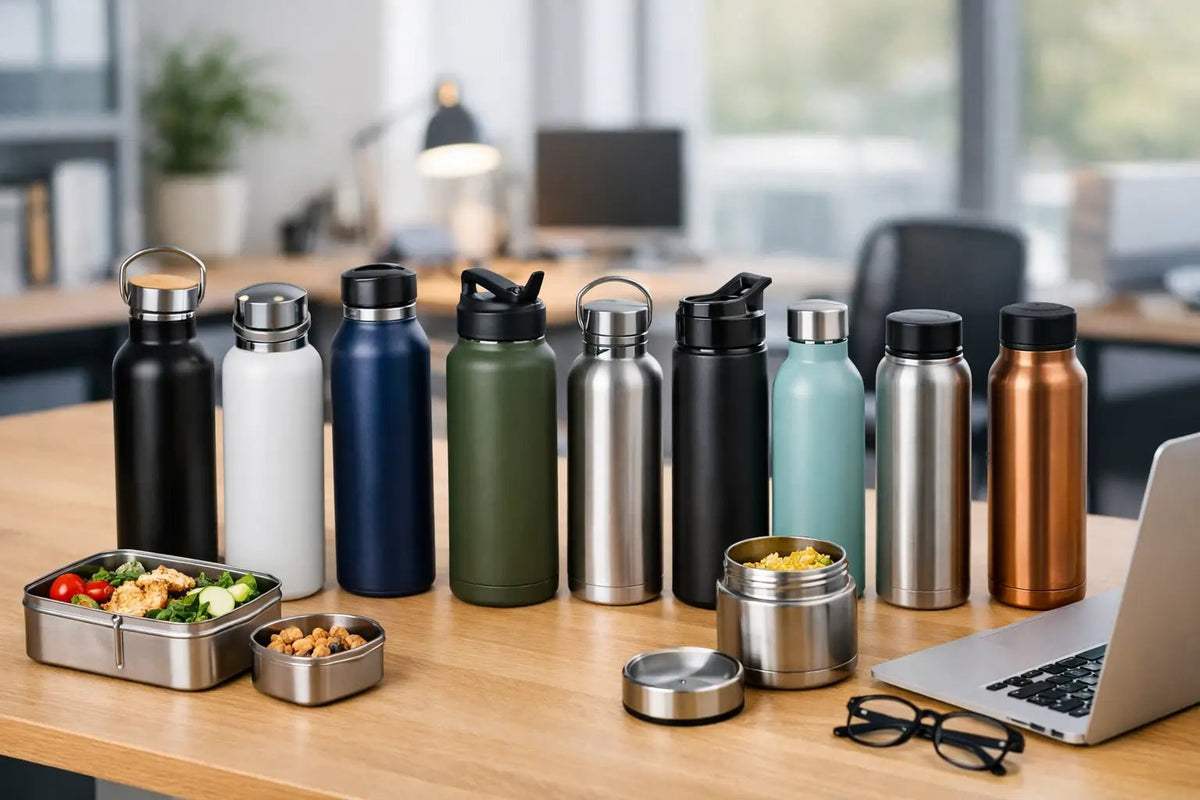
For adults, stainless steel is especially practical for office meals and commute-friendly lunches. A leakproof container with a proper seal is the difference between confident meal prep and carrying your lunch upright like a fragile science experiment.
There are a few foods where a different approach may help. If you are storing highly liquid soups or thin dressings, make sure the container is genuinely designed for leakproof use rather than assuming all seals perform the same. And if visibility is important to you, keep frequently used items together in one part of the fridge so nothing gets forgotten at the back.
Fridge organisation matters more than people think
A meal prep container can only do so much if the fridge is chaotic. Stainless steel meal prep works best when containers stack neatly and the week’s food is easy to find.
Try keeping prepped lunches on one shelf, snacks in one section, and dinner components together. That sounds basic, but it cuts down decision fatigue during the week. If everyone in the house knows where to look, you are less likely to open five containers just to find the cut cucumber.
Uniform container sizes also help. Stacking is cleaner, shelves stay tidier, and leftovers are easier to portion. This matters even more in family homes where fridge space disappears quickly.
If you prep for school and work at the same time, it can help to assign containers by purpose rather than by person. For example, use one style for full lunches and another for snacks or sides. That keeps mornings moving, especially when more than one lunch is being packed at once.
Cleaning, care, and getting long-term value
One reason people switch to stainless steel is to stop replacing containers so often. To get that long-term value, it helps to choose quality from the start and treat seals, lids, and clips properly.
Wash containers soon after use when possible, especially after oily or heavily seasoned foods. Let everything dry fully before stacking away. If your container includes seals or leakproof components, check them regularly and keep them clean so performance stays consistent.
This is also where build quality makes a real difference. A well-made stainless steel container is not just about the steel itself. It is also about how the lid fits, how secure the closure feels, and whether it keeps performing after months of everyday use. For busy families, that reliability is worth more than a long list of features.
Meals In Steel focuses on this practical side of food storage - dependable stainless steel products that are built for repeat daily use, whether that means school lunches, office meals, or weekly fridge prep at home.
Common mistakes in a guide to stainless steel meal prep
The most common mistake is making meal prep too ambitious. If your plan takes three hours and uses every dish in the kitchen, it probably will not become a habit. Keep it realistic. Prep a few staples, portion what you know your household will actually eat, and leave room for flexibility.
The next mistake is choosing containers based only on appearance. A neat-looking set is not much help if the sizes do not suit your meals or the lids are fiddly. Think about your actual routine. Do you need lunchbox compartments, stackable fridge containers, or leakproof options for commuting? Start there.
Another one is ignoring how children use containers. A lunchbox that looks tidy to an adult may be awkward for small hands to open, close, or unpack. If a container is for school, child-friendly design matters just as much as storage capacity.
Meal prep should make weekdays easier, not stricter. The right stainless steel setup gives you a routine that feels dependable, clean, and built to last. Start with the meals you pack most often, choose containers that suit real life, and let the system do the heavy lifting from there.


Leave a comment
This site is protected by hCaptcha and the hCaptcha Privacy Policy and Terms of Service apply.