
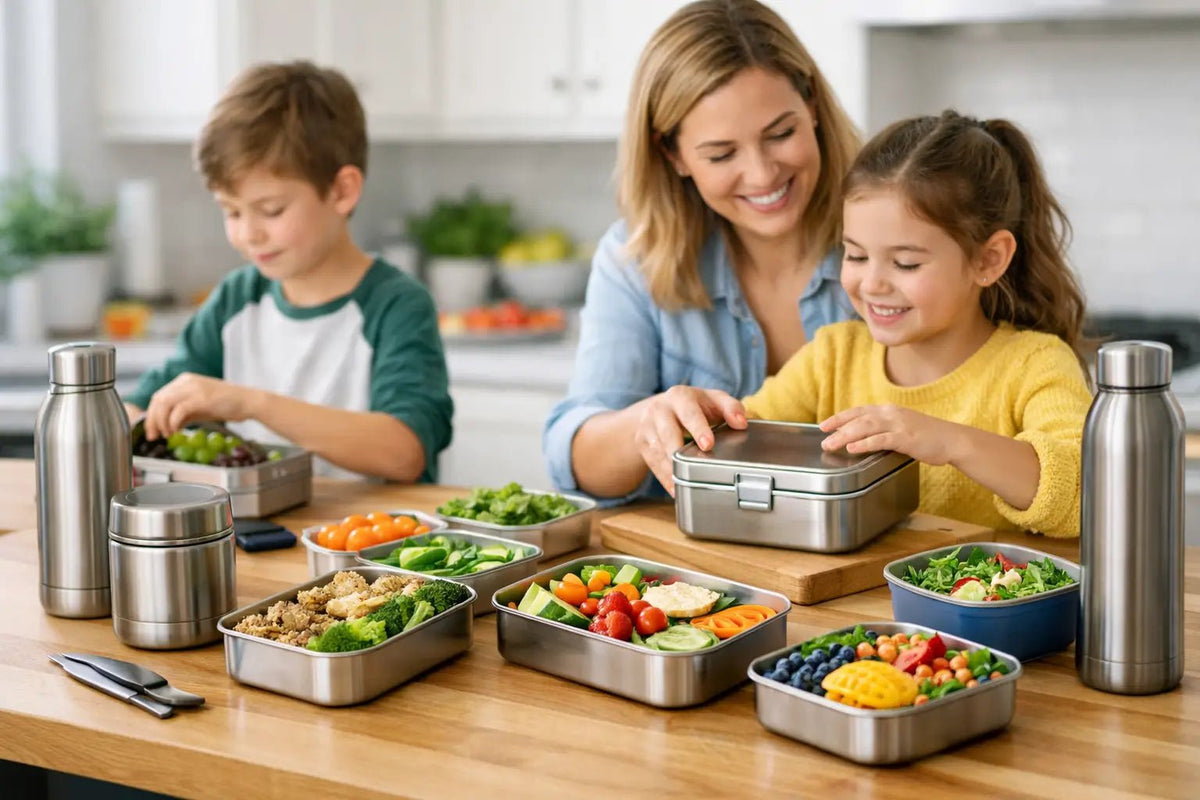
By Wednesday, most lunch plans fall apart for the same reason - they looked good on Sunday but did not suit real life. The salad went soggy, the pasta dried out, the container leaked in a school bag, or there simply was not enough food to keep everyone going. If you are wondering how to meal prep lunches in a way that actually saves time, the answer is not making fancier food. It is building a system that is easy to repeat, easy to pack, and reliable when mornings are busy.
For most families, the best lunch prep routine is the one that removes decisions. You want food that keeps well, containers that do not let you down, and a simple pattern you can reuse each week without getting bored. That matters whether you are packing school lunches, office meals or a few grab-and-go options for the days that get away on you.
How to meal prep lunches without wasting Sunday
A common mistake is trying to prep every lunch in full, all at once, with too many recipes. It sounds efficient, but it often creates extra washing up and a fridge full of meals nobody feels like eating by day four. A better approach is to prep in layers.
Start with one protein, one grain or carb, two or three vegetables, and a couple of easy extras. Think roast chicken, rice, boiled eggs, chopped cucumber, carrot sticks, cheese cubes, crackers, fruit or homemade muffins. From there, you can mix and match lunches instead of eating the exact same thing every day.
This approach works especially well for families because children often prefer familiar foods packed separately, while adults may want more of a combined meal. The same ingredients can become a rice bowl for work, a bento-style school lunch, or a simple snack box for an afternoon out.
Pick lunch foods that hold up well
Not every meal is suited to lunch prep. Some foods taste great fresh but decline quickly once packed, chilled and carried around. The lunches that work best are the ones that handle a bit of movement, a few hours in a bag, and a delayed eating time.
Rice bowls, pasta salads with sturdy ingredients, wraps packed fresh in the morning, mini frittatas, roast veg, sandwiches with dry fillings, snack plates and deconstructed lunches all tend to hold up well. Foods with high water content, like cut tomatoes or dressed leafy greens, need more care. They are still usable, but they are better stored separately until the last minute.
This is where the container matters just as much as the food. A leakproof lunchbox or stainless steel bento with separate sections makes it easier to pack yoghurt, dips, fruit and savoury items without everything merging by lunchtime. If you have ever cleaned a school bag after a container failure, you already know that good meal prep is not just about recipes.
The best lunch prep meals are often the simplest
Lunch does not need to be complicated to be worth eating. In fact, the easiest meals to repeat are usually built from plain, reliable ingredients with enough variety in texture and flavour to stay interesting. A few pieces of roast chicken, rice, capsicum, cucumber and hummus can be packed in different ways across the week. Add fruit on the side and you have a lunch that feels complete without much effort.
For children, simple also means more likely to be eaten. Separate compartments help, but so does choosing foods they can manage easily. Sliced fruit, bite-sized veg, cheese, crackers, mini sandwiches and leftovers that taste good cold are often more practical than ambitious lunchbox ideas.
Build a realistic lunch prep routine
If you want to know how to meal prep lunches long term, consistency matters more than intensity. You do not need a full Sunday production line. You need a rhythm that fits your week.
For some households, that means cooking a little extra at dinner and packing leftovers into lunch containers that night. For others, it means one short prep session on Sunday and a smaller top-up on Wednesday. There is no perfect format, only the one you will actually keep doing.
It helps to decide which parts are worth doing ahead and which are better fresh. Chopping veg, cooking proteins, portioning snacks and washing fruit can all be done in advance. Sandwiches, wraps and anything likely to go soggy are often better assembled on the day. That balance gives you the time-saving benefit of prep without the downside of stale lunches.
A simple formula for weekly lunches
When people get stuck, it is usually because they are trying to invent five different lunches. A formula makes things easier. Aim for a source of protein, something filling, produce that lasts well, and one extra that makes lunch feel enjoyable rather than purely functional.
That might look like chicken and rice with veg, pasta with tuna and corn, boiled eggs with crackers and fruit, or a bento-style lunch with cheese, cucumber, wraps and a treat. The exact food can change, but the structure stays the same. That is what keeps prep manageable.
Use containers that make prep easier
Meal prep gets sold as a food problem, but often it is a storage problem. If containers leak, stain, crack or make packing fiddly, the whole routine becomes harder than it needs to be. People give up on lunch prep when it creates mess, not just when they run out of ideas.
Stainless steel containers are especially useful for regular lunch packing because they are durable, easy to clean, and built for repeat use. They suit school lunches, office meals and family fridge storage without the constant replacement cycle that comes with flimsy plastic. For many households, switching to a container that is truly dependable is the change that makes meal prep stick.
There is also a practical hygiene benefit. Stainless steel does not absorb food odours or discolour the way some plastic containers can over time. If you are packing curries, pasta, fruit and savoury snacks across the same week, that matters.
Meals In Steel has built its range around this exact everyday reality - food that needs to stay contained, fresh and easy to carry without adding fuss to the routine.
Avoid the usual meal prep problems
The biggest meal prep frustrations are predictable, which means they are fixable. Soggy food usually comes from dressing too early or packing wet ingredients together. Dry food often needs a sauce packed separately or a slightly shorter storage time. Boredom tends to come from making too much of one meal instead of prepping components that can be recombined.
Portion size is another one. Children often need less bulk but more variety, while adults may want a lunch that is genuinely filling enough to avoid buying something extra at 3 pm. It is worth adjusting by person rather than packing everyone the same by default.
Food safety also matters. Cool cooked food before sealing it into containers, store lunches properly in the fridge, and use an insulated bag where needed. In warmer weather, especially for school or work commutes, that extra step can make a real difference.
Keep variety without making extra work
Variety does not have to mean more cooking. It can come from changing sauces, swapping fruit, rotating a different snack, or using the same ingredients in a new layout. Rice and chicken on Monday can become a wrap on Tuesday and a snack box with veg and dip on Wednesday.
That is especially useful for families with mixed preferences. You can prepare one shared set of ingredients and pack them differently depending on who is eating. It saves money, cuts waste and avoids the feeling that meal prep means everyone gets the same lunch on repeat.
How to meal prep lunches for school and work
School lunches and work lunches have similar goals, but they are not exactly the same. School food needs to be easy to open, easy to eat, and able to survive being moved around all morning. Work lunches can be a bit more flexible, especially if there is access to a fridge or microwave.
For school, think in terms of compact portions, simple foods and secure sections. For work, leftovers and make-ahead meals become more practical. In both cases, reliability matters. If the lunch leaks or ends up unappealing by midday, all the prep in the world does not help.
The sweet spot is a lunch routine that feels low effort but still worth eating. That could be a few prepped components in the fridge, packed each night in leakproof containers, or a batch of ready-to-go lunches sorted ahead for the next few days. Either way, the best system is the one that makes busy mornings feel easier, not stricter.
If your current lunch prep feels like a chore, scale it back. Prep fewer things, choose foods that travel well, and use containers built for daily life. A good lunch routine should save time, reduce waste and make the middle of the day simpler. That is enough reason to keep going.



Leave a comment
This site is protected by hCaptcha and the hCaptcha Privacy Policy and Terms of Service apply.