
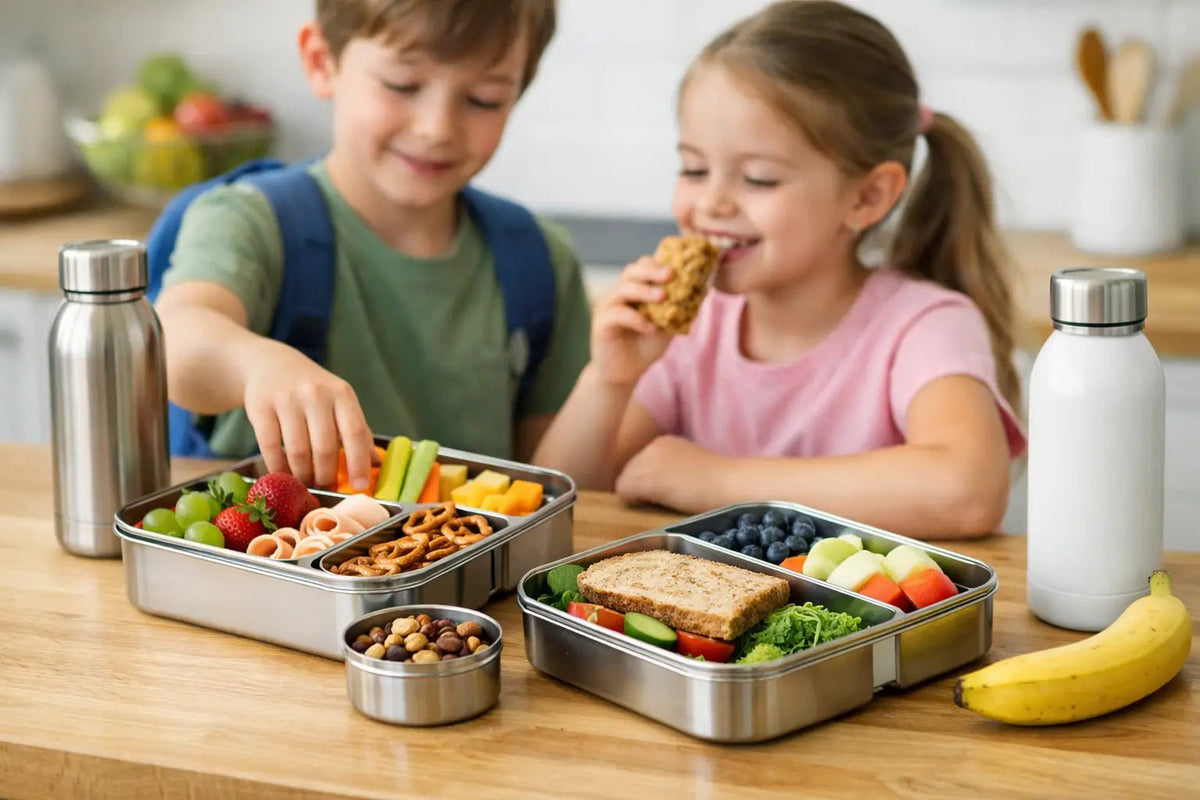
By 8.15am, most parents are not chasing lunchbox perfection. You are trying to get everyone out the door with shoes on, bags zipped, and something decent packed for morning tea. That is why learning how to pack school snacks well matters - not because snacks need to be fancy, but because they need to be easy to eat, easy to carry, and worth the effort it took to pack them.
A good school snack does three jobs. It survives the trip to school, stays appealing until break time, and comes home eaten more often than not. When those three things line up, the whole lunch routine gets easier.
How to pack school snacks without overthinking it
The biggest mistake is treating snacks like miniature lunches. School snacks need less variety, less prep, and less mess. They should be quick for kids to recognise, open and eat, especially when break times are short and attention spans are elsewhere.
Start with the way your child actually eats at school, not the way you wish they would. Some children are happy with cut fruit and crackers. Others ignore anything fiddly and will only eat food they can grab in seconds. It depends on the child, their age, and how much time they really have to sit down.
That is why consistency often works better than novelty. A few reliable snack combinations are usually more useful than a long list of ambitious ideas that add time to your morning and end up untouched.
Think in simple snack combinations
The easiest way to build a snack is to pair one item for quick energy with one item that helps it last a bit longer. For example, fruit with cheese, crackers with hummus, or a small muffin with yoghurt can work well. You do not need to hit every food group perfectly in one snack box. You just want something satisfying enough to get them through to lunch.
If your child is active or has a long gap between breaks, a more filling option makes sense. If they tend to nibble and leave half of it, smaller portions are often the better call. Packing too much can backfire just as easily as packing too little.
Pick foods that suit the school bag
Not every healthy snack is a practical school snack. Some foods bruise, leak, crumble, or turn soggy before morning tea even starts. That does not mean you need packaged food by default. It just means the container and the food need to suit each other.
Soft berries can work if they are packed in a firm, well-sealed compartment. Dry biscuits are fine until they share space with cut melon. Yoghurt is a great option if the container is genuinely leakproof, but a poor lid can ruin the rest of the bag. Most parents have learnt this the hard way.
This is where the lunchbox matters more than people think. A sturdy stainless steel snack box with secure compartments helps keep different foods separate, holds up to daily knocks, and cuts down on the usual plastic lid drama. For families packing lunches five days a week, durability is not a bonus. It is part of what makes the routine manageable.
Fresh is good, but sturdy is better
Cut fruit and veg are popular for a reason, but they need a bit of thought. Apple slices hold up better with a squeeze of lemon. Carrot, cucumber, capsicum and sugar snap peas travel better than softer salad vegetables. Bananas are easy, but only if they can avoid being squashed at the bottom of the bag.
Homemade baking can also be a strong option because it is easy to portion and usually travels well. Pikelets, savoury muffins, oat bars and banana bread are all practical choices. The trade-off is prep time. If baking adds stress to your week, keep it occasional rather than turning it into another job.
How to pack school snacks so kids can manage them themselves
If a child cannot open it, they may not eat it. That sounds obvious, but it gets missed all the time. Tight seals are useful, but they still need to be manageable for small hands. The same goes for wrappers, fiddly pouches, and containers with too many moving parts.
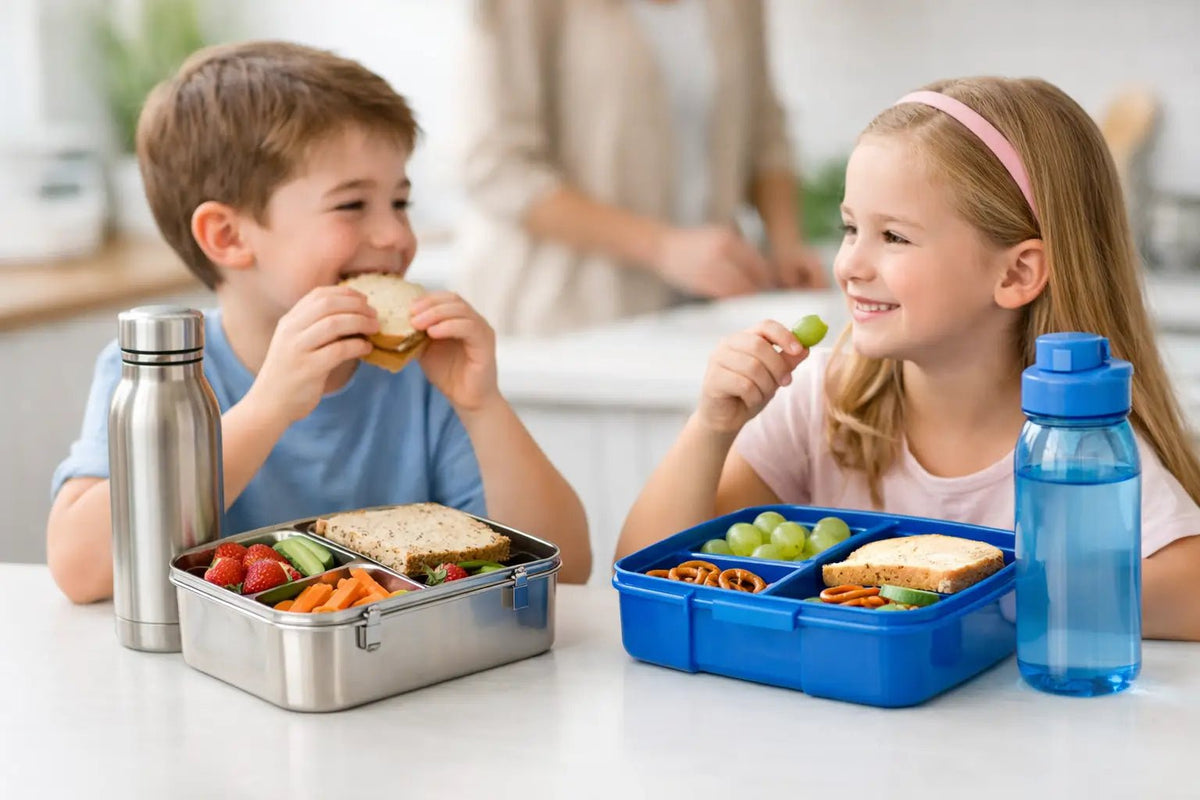
A good snack setup should let your child see what is inside straight away and get into it quickly. Younger children usually do better with finger foods and clear sections. Older kids can handle more variety, but they still appreciate food that is easy to grab between playing, chatting and rushing through break time.
It also helps to pack snacks in realistic portion sizes. A giant container of grapes or crackers can feel overwhelming, especially for younger kids. A smaller amount that looks achievable is often more likely to be finished.
Keep mess low and confidence high
Children are far more likely to eat snacks they can manage neatly. Foods that need a spoon, get sticky fast, or fall apart into crumbs all over their lap can be less appealing once they are sitting in a busy playground. There is a place for those foods, but usually not every day.
Packing in separate compartments helps with this. It keeps textures right, avoids flavour crossover, and gives children a bit of structure without needing multiple containers. That is one reason many parents move away from disposable packets and flimsy tubs over time. They want one reliable setup that works every school day.
Build a short rotation instead of reinventing snacks
If you are wondering how to pack school snacks every day without getting bored, the answer is not more creativity. It is a better rotation. Most families do best with a small group of snack options they know will work, then switch them around through the week.
For example, you might rotate between fruit and cheese, crackers and dip, a homemade muffin, yoghurt and berries, or popcorn with dried fruit. That gives enough variety to keep things interesting without forcing you to make new decisions every morning.
Children often prefer familiar foods anyway. Parents sometimes worry about repetition more than kids do. If your child reliably eats the same few snacks, that is useful information, not a problem.
There is also nothing wrong with repeating one strong option several times a week if it is practical, affordable and gets eaten. School lunches do not need to perform for social media. They just need to work in real life.
Choose containers that do some of the work for you
A well-packed snack starts before the food goes in. If the container leaks, pops open, or lets everything roll together, even a great snack can end up unappealing. Reliable containers save time because they reduce repacking, wrapping and last-minute fixes.
Stainless steel is a smart choice for school snacks because it is built to last, easy to clean, and free from the constant wear that comes with cheaper plastic containers. For busy families, that means fewer cracked corners, fewer stained lids, and less replacing things every term.
Leakproof performance matters too, especially if you are packing yoghurt, juicy fruit, dips or anything with moisture. There is a big difference between a container that looks secure on the bench and one that can handle a school bag being tipped, dropped and shoved into a cubby. That is where real-world design counts.
Meals In Steel has built its range around that kind of everyday use, which is exactly why stainless steel lunch gear appeals to so many families trying to simplify the school run.
Make small changes based on what comes home
The best feedback is the food that comes back uneaten. If the same snack returns three days in a row, something is off. It could be the portion, the texture, the timing, or simply that your child does not like eating that food at school.
Try adjusting one thing at a time. Cut it smaller. Pack less of it. Swap a soft fruit for something firmer. Separate foods that are making each other soggy. These small changes are usually more effective than starting from scratch.
It is also worth asking your child specific questions instead of the usual, vague ones. Rather than asking if they liked their snack, ask whether it was easy to open, whether they had enough time, or whether anything was squashed. Practical answers help you pack better next time.
A good snack is one that fits your real routine
Some families have time for homemade baking and cut veg every day. Some do not. Some children are adventurous eaters. Some want the same thing all term. A good snack routine has to fit your budget, your mornings, and your child as they are right now.
That means the best answer to how to pack school snacks is usually the simplest one. Choose foods that travel well, pack them in containers that hold up, and stick with combinations your child will actually eat. When the system works, mornings feel lighter, lunchboxes come home emptier, and one small part of family life becomes far less hard work.
Tomorrow morning, that is probably all you need.


Leave a comment
This site is protected by hCaptcha and the hCaptcha Privacy Policy and Terms of Service apply.