
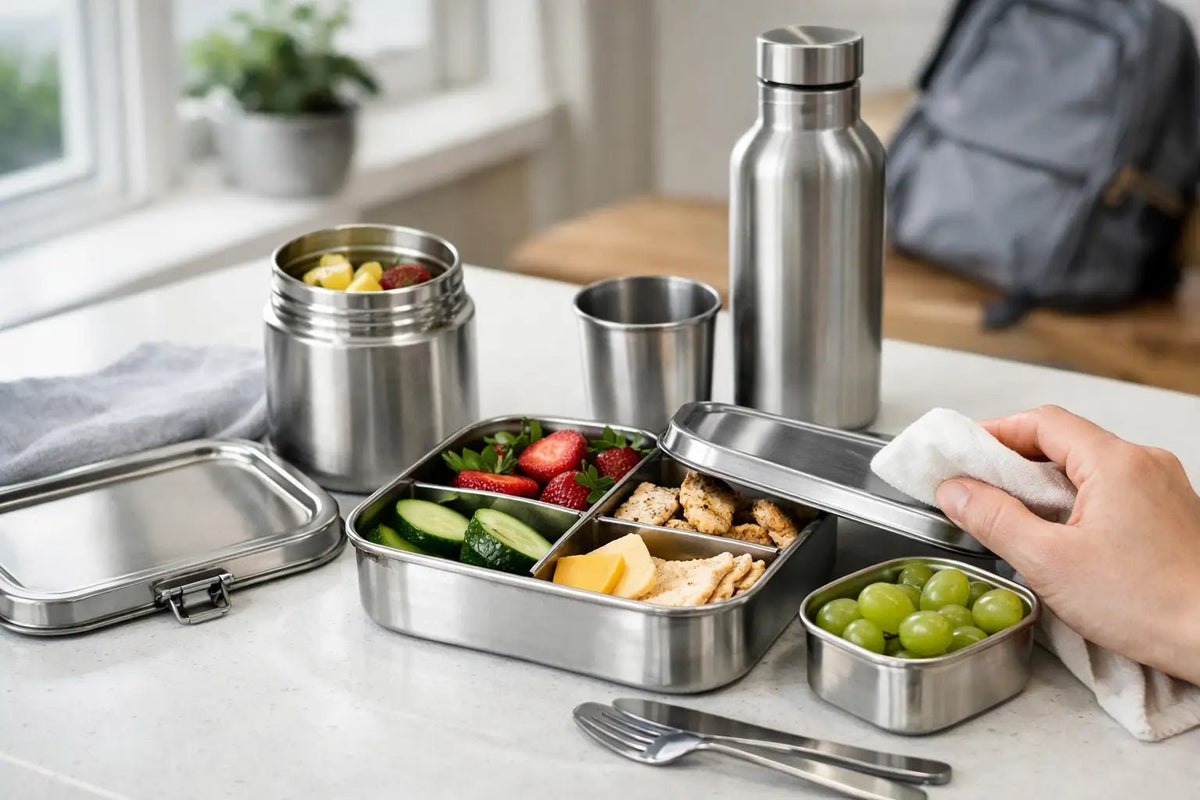
That whiff when you open a lunchbox after school is usually not coming from one bad lunch. It is the build-up of small habits - leftover crumbs in the corners, moisture trapped overnight, or a container that holds onto smells. If you are wondering how to prevent lunchbox odours without adding more work to your day, the answer is usually simpler than people expect.
The goal is not to scrub harder. It is to stop smells from settling in the first place. For busy families, that means choosing the right material, cleaning it properly, and making sure it dries fully before the next round of sandwiches, fruit and snacks.
Why lunchbox odours happen in the first place
Most lunchbox smells come down to three things - food residue, moisture, and time. Even when a lunchbox looks clean, tiny traces of yoghurt, cheese, dips or fruit juice can stay behind in seals, joins or corners. Leave that closed up for a few hours, especially in a warm school bag, and the smell starts to build.
Some foods are stronger than others. Boiled eggs, tuna, salami, curry, cut onion and soft cheese all tend to linger. That does not mean you need to avoid them entirely. It just means the lunchbox needs to be cleaned and aired out properly afterwards.
Material matters too. Some containers are simply easier to keep fresh than others. Stainless steel does not absorb odours the way other materials can, which is one reason families often find it easier to manage long term. If you are packing lunches five days a week, that difference becomes noticeable quite quickly.
How to prevent lunchbox odours with better daily habits
The biggest improvement usually comes from what happens after lunch, not before it. Once food has been sitting for hours, the container needs attention that same day. If leftovers stay sealed in a school bag until the next morning, smells have plenty of time to settle.
A quick empty, rinse and wash after school makes a real difference. It does not need to be complicated. Tip out crumbs, remove any uneaten food, and wash every compartment, lid and seal with warm soapy water. If the lunchbox is dishwasher safe, that can make life easier, but hand washing is still effective when done thoroughly.
Drying matters just as much as washing. A lunchbox put away even slightly damp can develop that stale smell surprisingly fast. Air drying is useful, but only if there is enough airflow. If moisture tends to collect around seals or under lids, finish with a tea towel before storing it.
It also helps to store lunchboxes open when they are not in use. Closing a freshly washed container straight away can trap moisture and create that musty smell parents know too well. Leaving it open on the bench or in a cupboard until morning is a simple fix.
The foods that tend to cause the most smell
Some lunches are harder on containers than others. Strong-smelling proteins and wet foods are usually the main culprits. Egg, tuna, leftover pasta, savoury mince, hummus and anything with garlic or onion can leave a smell behind if spills are not cleaned quickly.
Juicy fruit can also contribute more than people realise. Watermelon, kiwi fruit and orange segments are not strong-smelling on their own, but they release moisture that can mix with crumbs and dairy residue. Over time, that combination creates a sour smell rather than a single obvious food smell.
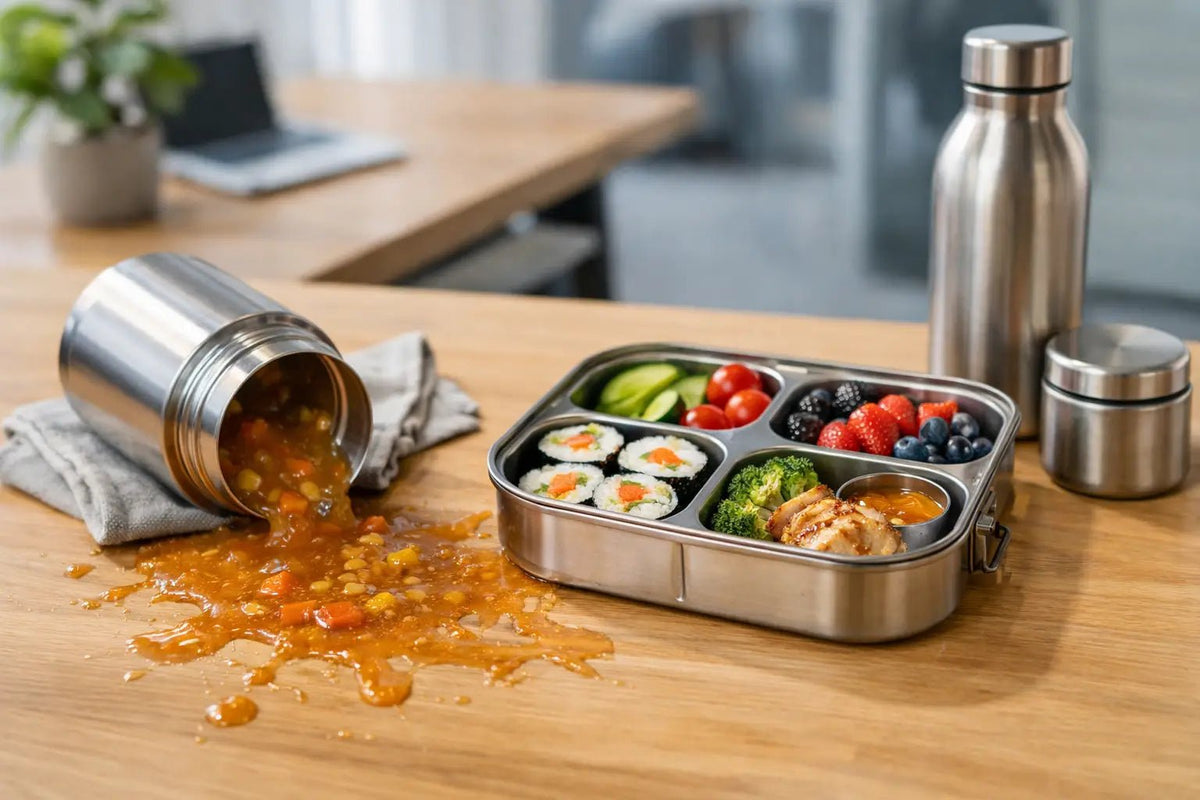
One practical fix is to keep very wet or strongly flavoured foods contained well. Leakproof sections or smaller snack containers help limit spread, which means less residue across the whole lunchbox. It is not about avoiding real food. It is about making sure one food does not affect everything else.
Why stainless steel makes odours easier to manage
If you are serious about how to prevent lunchbox odours, the container itself matters. Stainless steel is a strong choice because it is non-porous, durable and straightforward to clean. It does not hang onto smells in the same way some materials can after repeated use.
That is especially helpful for school lunches, where the lunchbox gets opened, closed, dropped, packed tightly and carried around all day. A container built for real daily use is less likely to develop hidden wear that traps residue. Smooth surfaces, fewer fiddly parts and solid construction all help.
For families trying to reduce plastic use, stainless steel also solves a common frustration - replacing lunch gear that never quite smells fresh again. A well-made stainless steel lunchbox is built to last, and it is easier to keep in good condition over time with regular care.
Meals In Steel focuses on this kind of everyday reliability, which is why stainless steel remains such a practical option for school bags, work lunches and meal prep.
Cleaning methods that actually work
Most odours can be managed with warm water, dish liquid and a soft cloth or brush. The key is being thorough around edges, seals and lids, especially after packing dairy, dips or leftovers. If the lunchbox has removable parts, separate them before washing so nothing gets missed.
When a smell does linger, a deeper clean usually sorts it out. A paste made from bicarbonate of soda and water can help lift stubborn odours. Rub it onto the affected area, leave it for a short time, then rinse and wash as normal. For stainless steel interiors, this is a simple way to freshen things up without harsh treatment.
White vinegar can also help with odour removal, but it needs to be rinsed away well afterwards. Some people like to soak containers, but that depends on the product and its seals. In many cases, a targeted clean is better than a long soak, especially if the lunchbox includes leakproof components that need to be dried carefully.
Avoid abrasive scourers that can mark the surface or wear down parts over time. Gentler cleaning is usually more effective in the long run because it protects the finish and keeps the container easier to maintain.
Small mistakes that make odours worse
One common mistake is leaving a used lunchbox zipped inside an insulated bag overnight. Even if the container itself is decent, trapped heat and moisture create the perfect conditions for smells. Take everything out as soon as you can, including ice packs and cloth wraps.
Another is forgetting the lunch bag itself. Sometimes the odour blamed on the lunchbox is actually coming from spilled yoghurt, squashed banana or an old juice leak in the bag lining. Washing the bag regularly is part of keeping the whole lunch setup fresh.
Overpacking can also be an issue. If soft fruit, crackers and savoury food all get pressed together, residue spreads further and cleaning takes longer. A lunchbox with the right layout helps here. Separate compartments and secure lids reduce mess, which means fewer places for smells to linger.
A routine that keeps things fresh without extra fuss
The most effective routine is the one you will actually keep doing. Empty the lunchbox after school, wash it that afternoon or evening, dry it fully, and store it open until the next use. That is usually enough to stop odours becoming an ongoing problem.
If your child regularly takes stronger-smelling food, build in a weekly deeper clean rather than waiting for a smell to appear. It is much easier to maintain freshness than to fix a lunchbox that has been closed up with hidden residue for weeks.
For working adults and meal preppers, the same rule applies. The longer food sits, the more likely odours are to hang around. Prompt cleaning and proper drying make a bigger difference than any fancy cleaning product.
A lunchbox should make daily life easier, not add another annoying job to the list. When the material is durable, the design is easy to clean, and the routine is simple enough to stick with, fresh lunches become much less of a battle - and a lot less smelly.


Leave a comment
This site is protected by hCaptcha and the hCaptcha Privacy Policy and Terms of Service apply.