
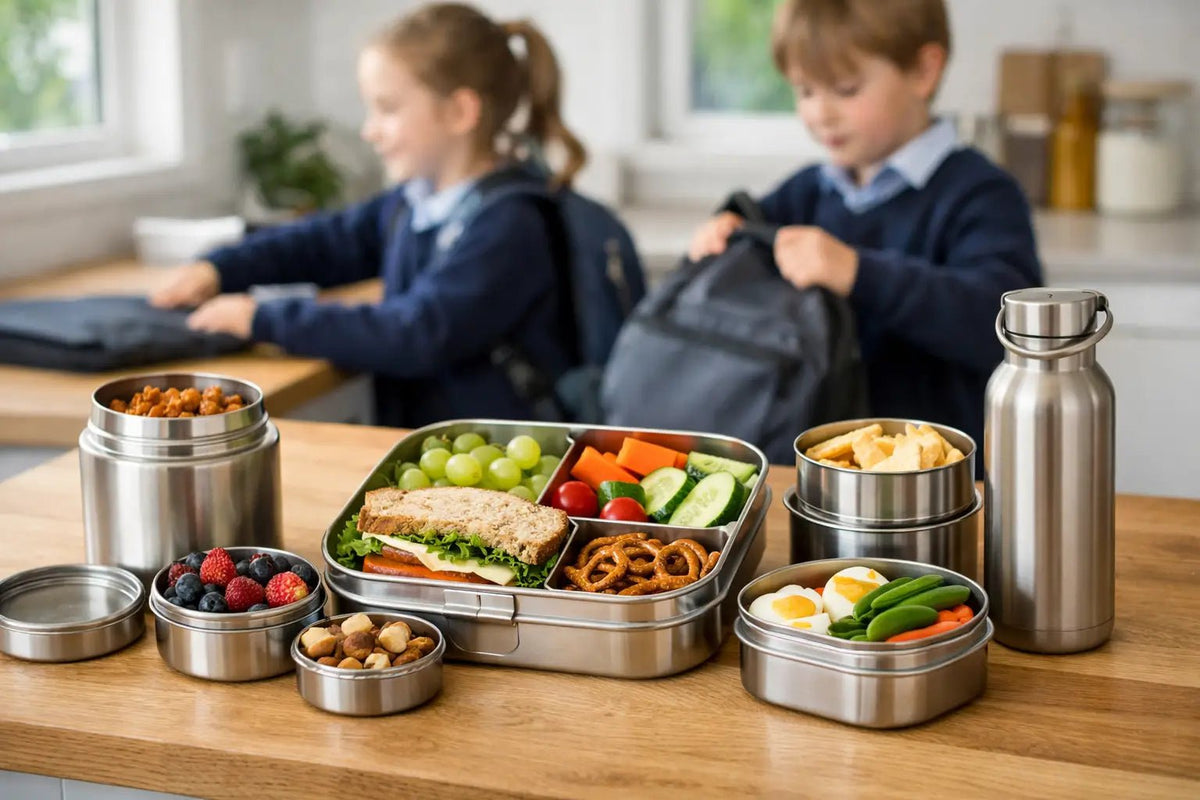
By week three of term, most lunch containers have already shown their true colours. The lid that never quite seals, the yoghurt that ends up through the school bag, the compartment that is somehow too small for a sandwich and too big for crackers. That is exactly why a proper school lunch container review matters - not for looks on the kitchen bench, but for how a container performs after repeated packing, washing and being knocked around all day.
For most families, the best lunch container is the one that makes mornings easier and comes home without a mess. That sounds simple, but it usually comes down to a few key details: leakproof performance, durable materials, easy-open design, sensible compartment layout and a size that actually suits your child’s appetite. Stainless steel stands out here because it is built for long-term use and doesn’t crack, stain or hold odours the way lower-quality alternatives often do.
What matters most in a school lunch container review
A good review should focus less on trends and more on daily use. Parents packing lunches every morning do not need a container that is complicated, fiddly or fragile. They need something reliable.
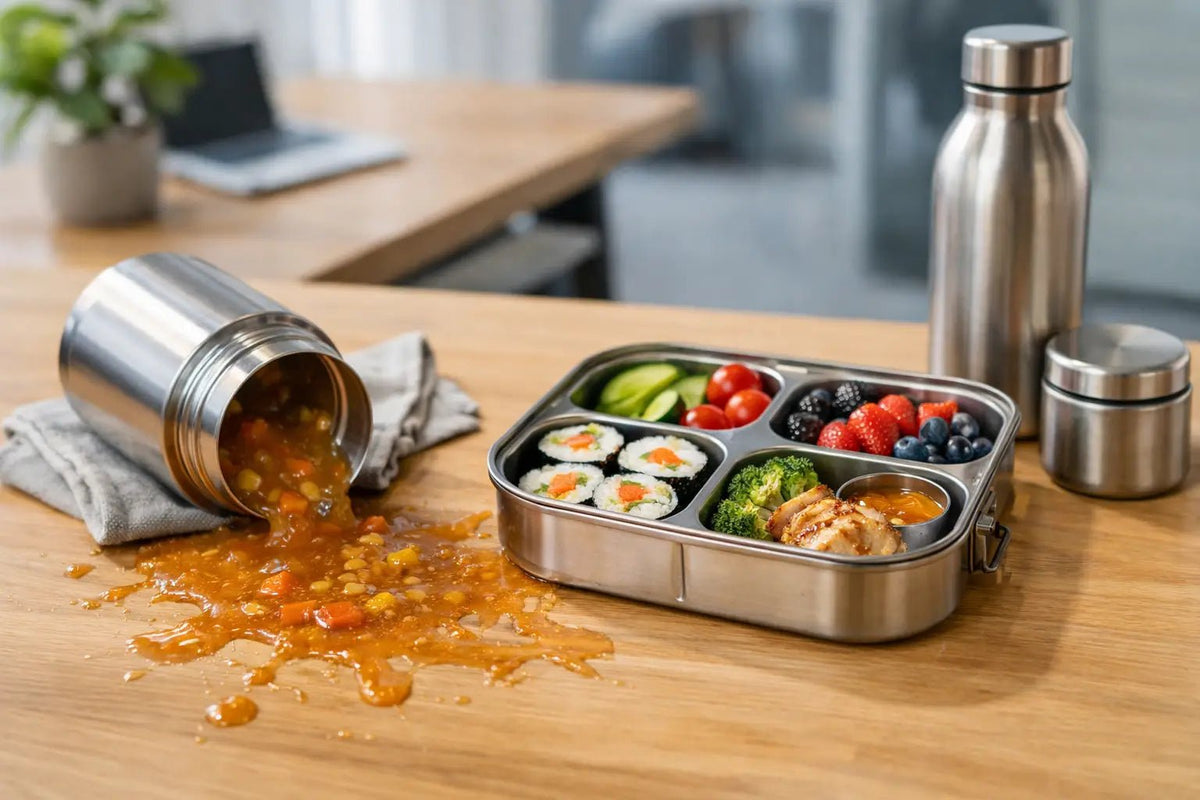
Leakproof performance is usually the first test. Not every school lunch needs a fully leakproof container, but if you are packing yoghurt, dips, juicy fruit or pasta salad, it makes a real difference. A container can be beautifully made and still be the wrong choice if it allows food to move between sections or leak into the bottom of the bag. This is where seals and lid design matter just as much as the base material.
Durability comes next. School bags get dropped, squashed into lockers and tossed into the back seat. Containers for school lunches need to handle rough treatment without clips snapping or corners cracking. Stainless steel has a clear advantage because it is strong, doesn’t shatter and holds up well over time. That matters even more when you are buying for more than one child and want something that lasts beyond a single school year.
Then there is usability. Younger children need lids and clasps they can manage on their own. If a container is too stiff to open, lunch may come home untouched. If it is too loose, you risk leaks. The best options strike a balance - secure enough for the school bag, simple enough for little hands.
Material makes a bigger difference than most people expect
When comparing lunch containers, material is not just about appearance. It affects food freshness, durability, cleaning and how often you need to replace the container.
304-grade stainless steel is a strong choice for school lunches because it is durable, food-safe and easy to wash. It does not retain smells from foods like tuna, boiled eggs or leftovers, and it is far less likely to warp or stain with regular use. For families trying to reduce reliance on plastic, stainless steel also makes sense as a longer-term investment rather than a frequent replacement.
That said, not every stainless steel container is identical. Some are designed mainly for dry foods and snacks, while others include silicone seals or leakproof lids for wet foods. This is an important trade-off. If your child mostly takes sandwiches, fruit and crackers, you may not need a fully leakproof model. If lunch often includes yoghurt, cut melon or leftovers, you probably do.
Weight is sometimes raised as a concern, but in practice, a well-designed stainless steel lunchbox is usually still easy for children to carry. The bigger factor is size and layout rather than the material itself.
The best school lunch container review looks at real lunch habits
A container that works beautifully for one family may be frustrating for another. The best school lunch container review takes into account what actually gets packed each day.
If your child likes variety, a bento-style container with separate sections can be very helpful. It keeps foods apart, makes lunch more appealing and cuts down on the need for wrapping or extra snack tubs. This style works well for sandwiches cut into halves, fruit, cheese, crackers and small savoury items.
If your child prefers larger portions or simple lunches, a roomy single-compartment container may be better. Older children often move away from snack-style lunches and want wraps, sushi, pasta or leftovers that need more uninterrupted space. In that case, too many dividers can become annoying rather than useful.
There is also the question of how much flexibility you need. Fixed compartments are tidy and predictable, but they can limit what fits. A larger open container gives you more packing options, though it may require a separate leakproof snack pot for wetter foods. Neither approach is better across the board - it depends on the age of your child and the food you regularly send.
Features worth paying for and features you can skip
Some lunchbox features sound useful until you are dealing with them every day. Others genuinely improve the school lunch routine.
A reliable seal is worth paying for, especially if you want to pack more than dry food. So is a quality latch or clip system that does not feel flimsy. Rounded corners help with cleaning, and a smooth stainless steel interior makes it easier to remove food residue quickly. These are practical details, but they make a difference over months of daily use.
On the other hand, overly complicated inserts, novelty shapes and too many tiny compartments can become hard work. They may look appealing at first, but they often slow down packing and cleaning. Most parents are better served by a simple, well-made design that covers the basics properly.
Dishwasher compatibility also matters, though hand washing can help extend the life of some lids and seals. If you want the lowest-maintenance option, check whether all parts are easy to clean and dry fully. A lunch container does not need to be high-maintenance to be premium.
How to tell if a container will last
Photos rarely tell you enough. A container can look solid online and still disappoint once it is used every day.
Look closely at how the lid closes and whether the seals appear firmly integrated rather than flimsy add-ons. Consider whether the hinges, clasps or latches are likely to stand up to repetitive use. A warranty is also a good sign. It suggests the product is built with long-term use in mind, not just quick sales.
Customer feedback is another useful filter, especially when reviews mention school bags, leaks, ease of use and longevity. Those are the details that tell you whether the container performs in real life. For Kiwi families, local fulfilment can also be a practical advantage if you need help quickly or want confidence that support is close to home.
Meals In Steel has built a strong following in this space for exactly those reasons - stainless steel designs, leakproof performance where it counts, and products made for daily family use rather than occasional outings.
Which type of lunch container suits your child?
For new entrants and younger primary kids, smaller compartment lunchboxes usually work best. They help with portioning, keep foods separate and are easier for children to navigate independently. You want a secure lid, but not one that turns opening lunch into a wrestling match.
For older primary children, a medium to large bento or a larger single-compartment container often makes more sense. Appetites change, and so do food preferences. More space and fewer restrictions can make packing easier.
For teens, the main issue is usually capacity. They tend to need larger portions and may prefer wraps, rolls, rice dishes or leftovers. At that point, durability becomes even more important because the container is likely to be used hard and often.
A better lunch routine starts with fewer compromises
The most useful school lunch container review is the one that helps you avoid buying twice. A container should suit the food you pack, survive daily school life and make lunch prep feel less like a chore. If it leaks, breaks, stains or frustrates your child, it is not saving time or money.
For busy families, stainless steel is often the practical choice because it is dependable, easy to maintain and built to last. Pick the right size, choose the right level of leakproofing, and focus on everyday function over gimmicks. The best lunch container is the one you do not have to think about once the term gets busy.


Leave a comment
This site is protected by hCaptcha and the hCaptcha Privacy Policy and Terms of Service apply.