
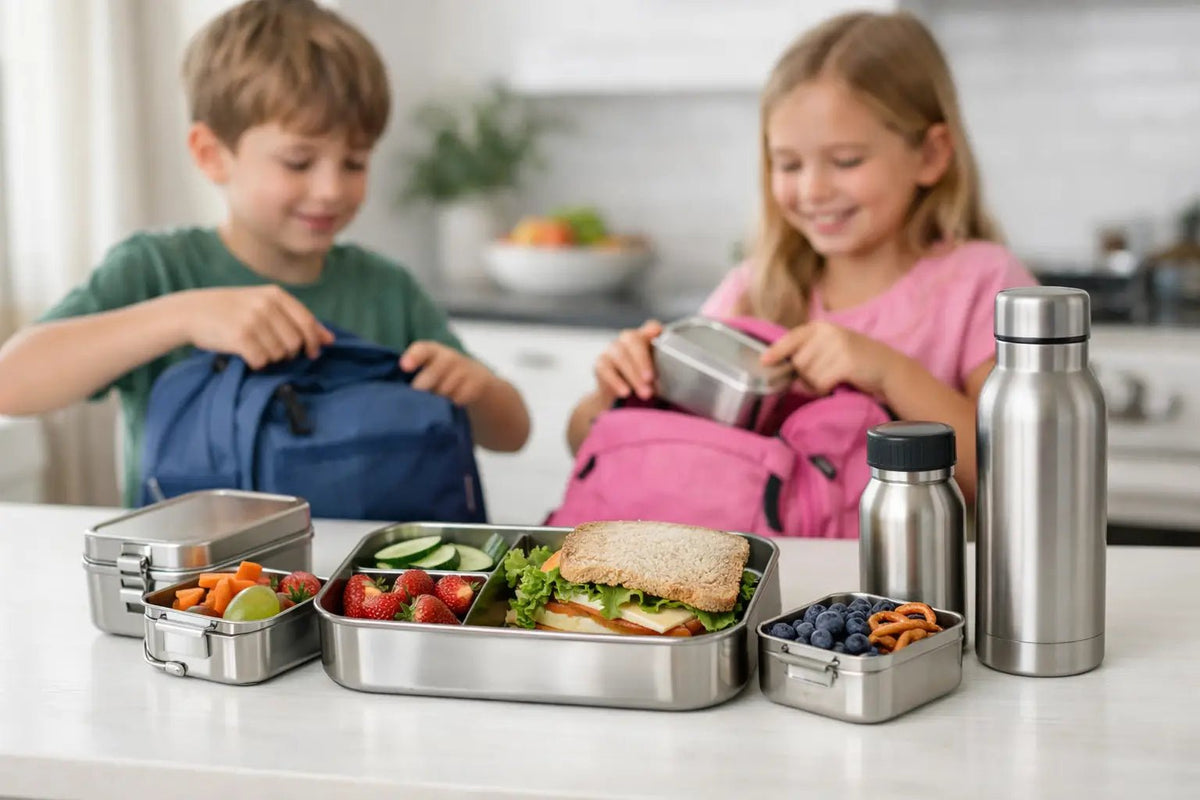
One of the quickest ways to make school lunch packing harder than it needs to be is choosing a lunchbox that is simply the wrong size. If you are wondering what size lunchbox for school makes sense, the answer is not just “big enough for food”. It needs to suit your child’s appetite, school day, bag space, and how you actually pack lunches each morning.
A lunchbox that is too small means squashed fruit, no room for variety, and extra snack containers rattling around the school bag. Too large, and you end up with wasted space, bulky weight, or lunches that look underfilled and come home half-eaten. The best size sits in the middle - enough capacity for a full school day, without making packing awkward.
What size lunchbox for school depends on
There is no single perfect size for every child. A five-year-old in their first year of school usually needs something quite different from a ten-year-old who gets through morning tea and lunch like clockwork.
Start with the rhythm of the day. Some schools have a short fruit break, morning tea and lunch. Others have just one main eating window and a snack break. If your child needs food spread across the day, a lunchbox with multiple compartments often works better than one large empty space because it helps you portion food clearly and keep different items separate.
Appetite matters just as much as age. Some younger kids prefer little portions of lots of different foods. Some older kids want a proper sandwich, fruit, veg, and two filling snacks. The right size should match what they genuinely eat, not what you wish they would eat.
Bag size is another practical detail parents often overlook. A lunchbox can be perfect on the bench and still be a pain once it has to fit inside a school bag with readers, a jumper, a hat and a drink bottle. If the lunchbox is too deep or too wide, it becomes one more thing to wrestle with every morning.
A practical way to choose lunchbox size
Instead of guessing by product photos, think in terms of meal capacity. For most school-aged children, a lunchbox should comfortably hold one main item and several smaller foods. That usually means room for a sandwich or wrap, fruit, chopped veg, and one or two snacks.
For younger children, a compact to medium lunchbox is often the best fit. It keeps portions realistic and is easier for little hands to manage. If you pack very small eaters, oversized lunchboxes can lead to too much food, more waste, and less confidence around lunchtime because everything feels like a lot.
For primary-aged children with bigger appetites, a medium to large lunchbox is usually more practical. This gives enough room for a substantial main meal plus snacks without needing separate containers. If your child stays at school for after-school care or sport, size up slightly so you are not trying to squeeze in an extra snack at the last minute.
For older students, capacity often matters more than compartment count. They may want a fuller sandwich, leftovers, sushi, pasta, or a more substantial lunch. A lunchbox with decent depth can be more useful than one with many tiny sections that only suit snack-style packing.
Small, medium or large?
A small lunchbox suits children who eat light, need only a short school-day lunch, or do best with simple packed food. It is also useful when the school requires a separate fruit break container. The trade-off is that small lunchboxes can run out of room quickly once you add bulkier items like whole fruit, yoghurt pouches or homemade muffins.
A medium lunchbox is the most flexible option for many families. It offers enough room for a balanced lunch without becoming bulky, and it usually fits more easily into standard school bags. For parents who pack a mix of sandwiches, cut fruit, crackers, and veg sticks, medium tends to be the easiest size to live with day to day.
A large lunchbox makes sense for bigger eaters, long school days, or children who prefer full meals rather than snack-style lunches. It is also useful if you want to reduce the number of separate containers. The downside is weight and space. Once filled, a large lunchbox can take up a lot of room and feel heavy for younger kids.
The best lunchbox size by age group
Age is not a rule, but it is a helpful starting point.
For kindy and new entrant children, compact lunchboxes are usually enough, especially if food is packed in easy-to-open portions. At this stage, ease of use matters as much as capacity. If they cannot open the box, or if the compartments are too fiddly, the size will not matter because the food may come home untouched.
For children in the early to middle primary years, medium lunchboxes tend to work well. This is when appetites often grow, lunch expectations become more varied, and you need enough space for a satisfying mix of foods.
For older primary children and intermediate students, medium to large lunchboxes are often the better fit. They may need more substantial food, especially on sport days or when they are going through a growth spurt. If your child is regularly finishing everything and asking for more, that is usually a clear sign the lunchbox is too small.
What to look for beyond size
Size matters, but it is not the only thing that makes a lunchbox work well for school. A good school lunchbox should also be practical in real life.
Leakproof performance makes a big difference if you pack yoghurt, dip, juicy fruit or leftovers. A lunchbox can be the right size and still be a daily nuisance if it leaks through the school bag. Parents usually care about capacity first, then learn very quickly that leakproof matters just as much.
Compartment layout is another big one. A well-sized lunchbox with useful sections can make packing faster and help food stay appealing until lunch. Too many tiny compartments, though, can limit what you pack. If you regularly make sandwiches or wraps, make sure the main section is genuinely large enough.
Durability also matters more than it might seem. School lunchboxes get dropped, shoved into bags, stacked on classroom shelves and handled by kids in a hurry. If clips crack or hinges wear out, the size becomes irrelevant. A lunchbox built to last saves money and hassle over time.
This is one reason many families move towards stainless steel. It is hard-wearing, easy to clean, and avoids the cycle of replacing plastic lunch gear every school year. For busy households, that reliability counts.
Common mistakes when choosing what size lunchbox for school
A common mistake is buying for “growing room” and ending up with something far too big. It sounds sensible, but a lunchbox that overwhelms your child now is rarely the right choice. It is better to choose for current needs and daily ease.
Another mistake is focusing only on external dimensions. Two lunchboxes can look similar from the outside but offer very different usable space inside. Deep lids, bulky dividers and awkward shapes can reduce what actually fits.
It is also easy to choose based on aesthetics rather than function. A nice-looking lunchbox still needs to fit the foods your child will eat happily and manage independently at school.
How to tell if your current lunchbox is the wrong size
If food is constantly packed into extra containers, the lunchbox is probably too small. If there is always a large amount of empty space, it may be too big. If the lunchbox barely fits in the bag, pushes against books, or makes the bag awkward to zip, that is another sign the size is off.
You can also learn a lot from what comes home. Squashed food, untouched items, and complaints about opening or carrying the lunchbox all point to a mismatch. The right size should make lunch easier to pack, easier to carry, and easier to eat.
A simple rule of thumb
If you want a straightforward answer, a medium lunchbox is the best starting point for most school-aged children. It gives enough room for a balanced day’s food without becoming too bulky for everyday school bags. From there, go smaller for younger or lighter eaters, and larger for older children, long days, or bigger appetites.
For families who want a dependable option that handles real school-bag use, a well-designed stainless steel lunchbox is often the most practical long-term choice. Brands like Meals In Steel focus on exactly that balance - enough capacity for everyday school lunches, leakproof performance where it counts, and durability that lasts beyond one school term.
The best lunchbox size is the one that suits your child’s real day, not an ideal version of it. When the box fits the food, the bag and your routine, lunch packing gets a whole lot easier.



Leave a comment
This site is protected by hCaptcha and the hCaptcha Privacy Policy and Terms of Service apply.