
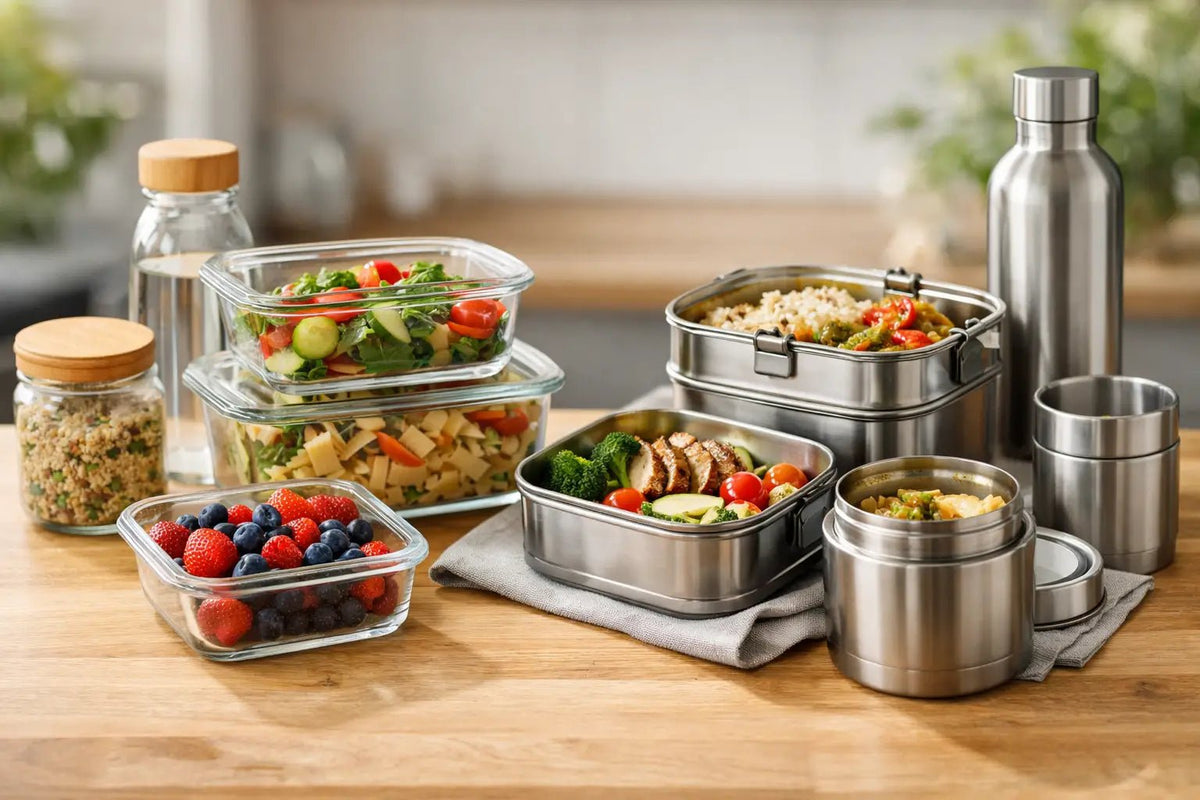
A container that looks perfect on the kitchen bench can be a poor fit for a school bag. When comparing glass containers versus steel containers, the real question is not which material is best overall. It is which one will handle your family’s daily routine - early mornings, packed bags, leftovers, sports practice and the occasional drop on the driveway.
Both glass and stainless steel can be excellent choices for storing food without relying on disposable options. They are reusable, long-lasting and easy to keep clean. But they perform very differently once food leaves the fridge.
Glass containers versus steel containers: the key differences
Glass is often the familiar choice for leftovers and meal prep. You can see what is inside at a glance, it does not retain food smells easily, and many glass containers can move from fridge to oven or microwave when used according to their manufacturer’s instructions. For home storage, those are useful advantages.
Stainless steel is built for a different kind of job. A quality 304-grade stainless steel container is light enough for everyday carrying, highly resistant to knocks and designed to keep going through years of use. It will not shatter if it lands on the floor, which matters when lunchboxes are handled by children, crammed into bags or taken outdoors.
The deciding factors usually come down to durability, weight, visibility, heating needs and how confidently the container can travel.
Durability: steel is made for bumps and busy bags
Glass can be tough, particularly tempered glass, but it remains breakable. A chip around the rim or a cracked corner can mean the container is no longer safe or practical to use. This is less of an issue in a quiet office fridge, but it is a genuine consideration for school lunches, commuting and family outings.
Stainless steel does not have the same fragility. It may pick up the occasional scuff or small dent after a hard knock, yet it is far less likely to fail suddenly. That makes it a practical choice for children who are still learning to manage their lunch bags, or for anyone tired of replacing containers after a short lifespan.
For food storage that needs to survive a busy week, steel usually has the edge. It is the sort of reliability that reduces one small source of morning stress.
Weight: lighter lunches are easier to carry
Glass has a solid, premium feel, but that weight adds up quickly. Pack several glass containers into a work bag or a child’s school bag and the load can become noticeably heavier before food is even added.
Stainless steel containers are generally much lighter while still feeling substantial. This is especially helpful for bento-style lunches with several compartments, day trips, camping and meal prep carried between home and work. A lighter container also means less chance of a heavy bag being dropped or knocked about.
If your container stays at home, glass weight may not matter. If it travels daily, steel is usually the easier option.
Food visibility: glass makes fridge organisation simple
Glass has one clear advantage: you can see the contents without opening the lid. That can help with fridge organisation and make leftovers less likely to be forgotten at the back of a shelf. For prepared dinners, sauces and ingredients you want to identify quickly, transparency is genuinely convenient.
Steel is opaque, so it needs a little more routine. Some households label prepared meals, while others use different container sizes for different jobs - one for snacks, another for sandwiches, and another for dinner leftovers. Once that system is in place, the lack of visibility is rarely a major problem, particularly for food packed and eaten on the same day.
For long-term fridge meal prep, glass may suit people who value seeing every portion. For daily packed food, steel’s strength tends to be more useful than transparency.
What about leaks, seals and messy foods?
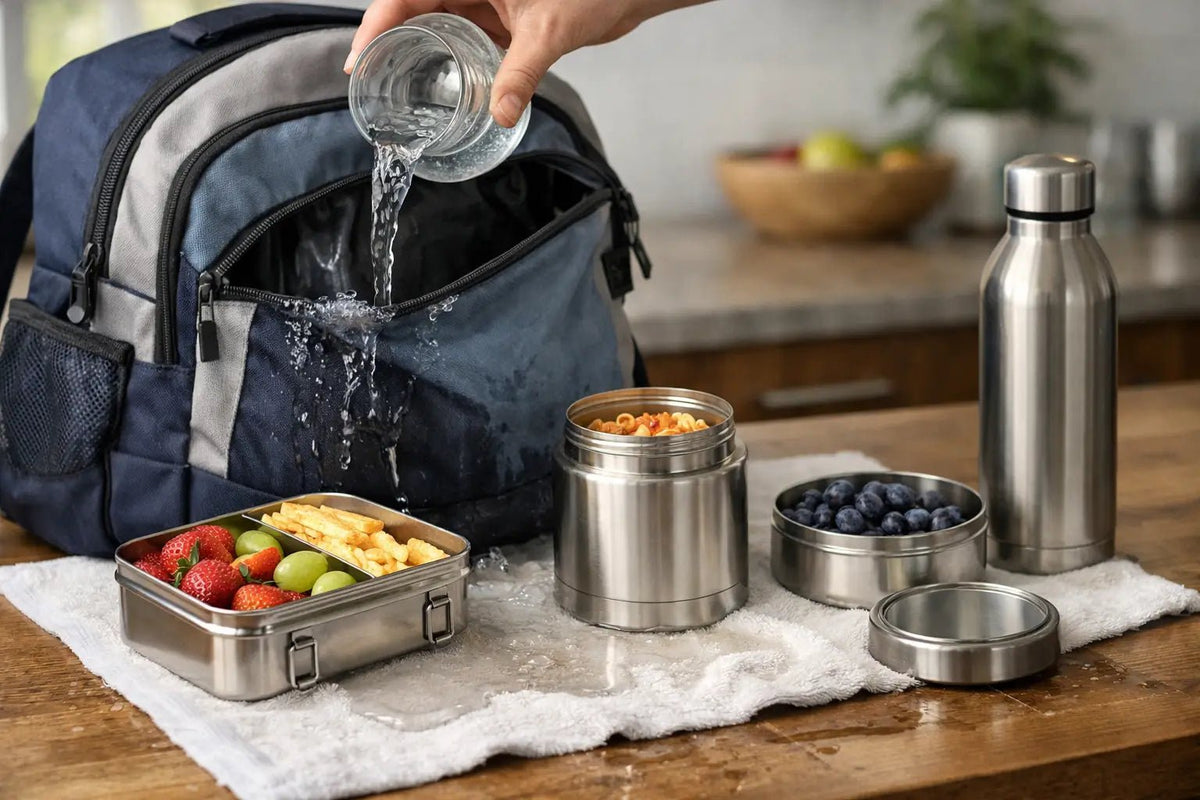
Neither glass nor steel is automatically leakproof. Leak resistance depends on the design of the lid, the seal, the clips and how the container is used. A well-made container with a secure silicone seal can handle yoghurt, dips, dressings and juicy fruit far better than one with a loose or poorly fitted lid.
This is where it pays to look beyond the base material. Check whether the container is described as leakproof rather than simply having a lid. Consider whether it is intended for wet foods, and leave enough room at the top when packing very full containers. Hot food can also create pressure as it cools, so it is sensible to follow the product’s care instructions.
For school bags, a dependable seal matters as much as a tough container. One leak can spoil a lunch, a library book and everyone’s mood before the first bell.
Safety and food freshness
Both glass and quality stainless steel are non-reactive choices for everyday food storage. Glass has a smooth, non-porous surface and does not absorb flavours or colours. Stainless steel is also easy to clean and works well for a wide range of foods, including fruit, sandwiches, cheese, snacks and prepared meals.
For stainless steel, grade matters. 304-grade stainless steel is widely used for food containers because it is durable, corrosion-resistant and well suited to repeated daily use. With ordinary care, it handles the demands of family lunches without becoming brittle or breaking apart.
Neither material needs special treatment to stay fresh-looking. Wash containers thoroughly, dry them before storing, and avoid using abrasive pads that can dull surfaces or damage seals. Lids and seals deserve attention too, because these are the parts that work hardest to keep food contained.
Heating and cooling: choose for the way you eat
Glass is often the more flexible option when reheating is part of your routine. Many glass containers are microwave and oven safe, though lids, seals and temperature limits vary. Always check the individual product instructions, and avoid sudden temperature changes that can stress the glass.
Stainless steel should not go in the microwave. That does not make it less useful - it simply makes it better suited to food eaten cold, packed for later, or transferred to a plate before reheating. Think school lunches, office salads, snack boxes, road trips and containers of leftovers carried home from work.
For chilled food, both materials work well. Steel can feel particularly practical for lunchbox use because it is easy to pack, light to carry and untroubled by the knocks of daily transport.
Which container is right for your household?
Glass is a sensible choice when your main priority is home-based meal prep, oven-to-table convenience or being able to see every leftover in the fridge. It is especially useful for foods you plan to reheat directly in the container, provided the product is rated for that purpose.
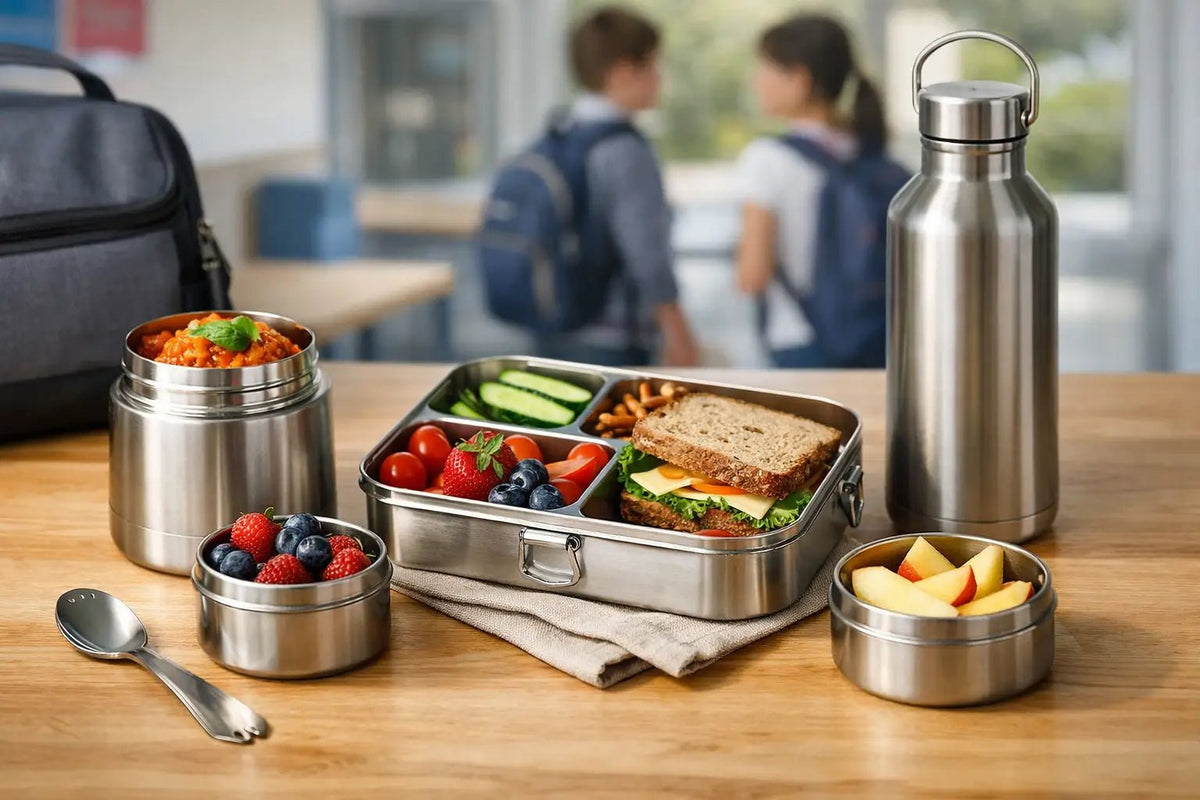
Stainless steel is the stronger choice when containers need to travel. It suits school lunches, office meals, snacks, picnics, camping and active family weekends. Its lighter weight and shatter-resistant nature make it easier to trust in a bag, while a properly designed leakproof lid helps protect the rest of the day’s gear.
Many households find there is room for both. Glass can earn its place in the kitchen, while stainless steel does the hard yards outside it. But if you are choosing one material for daily lunch packing, steel is usually the more forgiving option.
Meals In Steel focuses on premium 304-grade stainless steel containers because real life is not gentle on lunch gear. A container should be easy for children to use, dependable around wet foods and made to last beyond a single school term.
The best container is the one you reach for without thinking twice on a rushed morning. Choose glass where heat and visibility matter most, and choose quality stainless steel when durability, lighter carrying and everyday confidence matter more.


Leave a comment
This site is protected by hCaptcha and the hCaptcha Privacy Policy and Terms of Service apply.