
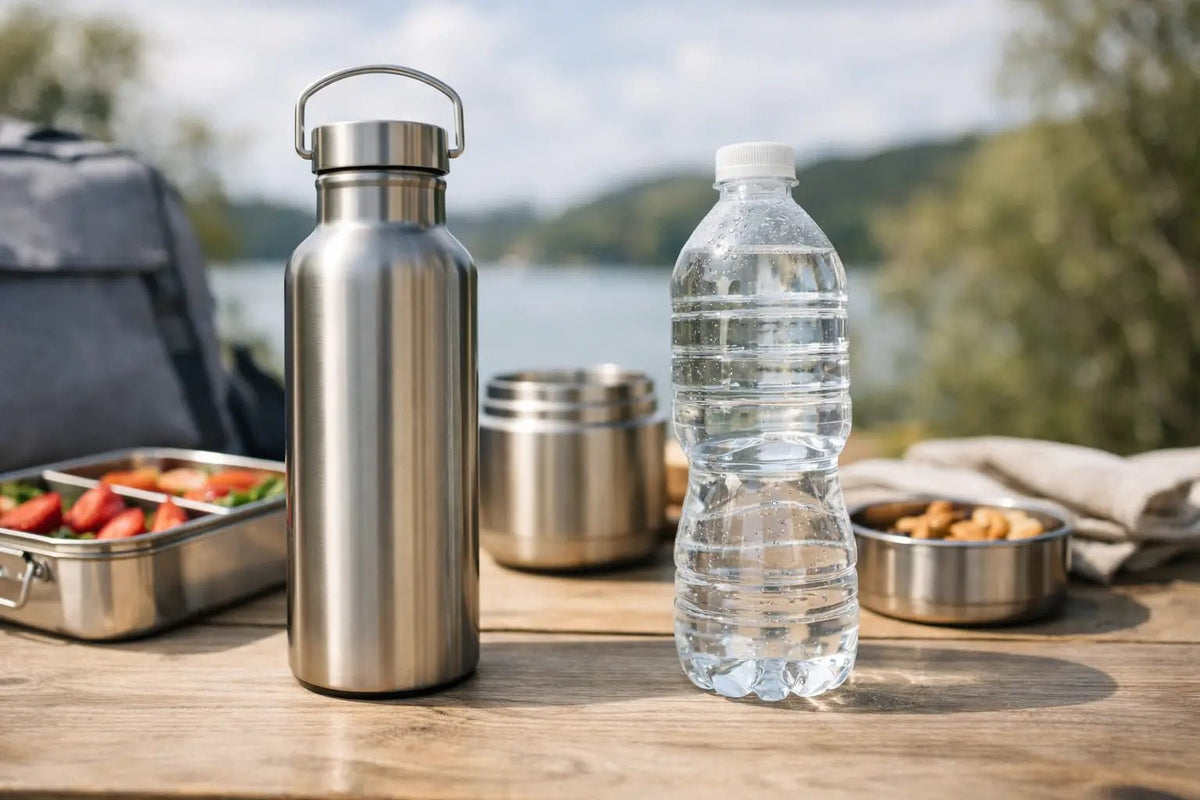
A bottle that leaks across homework, library books and a clean school uniform is not a small inconvenience. When weighing up a drink bottle versus plastic bottle, most families are really asking a more useful question: which option will stay dependable through daily drops, dishwashing and packed bags?
For busy households, a quality stainless steel drink bottle is usually the clear long-term choice. It is made for repeat use, handles the knocks of everyday life well and helps reduce reliance on disposable and short-lived plastic. But the right bottle still comes down to who is using it, where it is going and which lid style suits their routine.
Drink bottle versus plastic bottle: the everyday difference
The biggest difference is not how a bottle looks on the kitchen bench. It is how it performs after months of school runs, sport, office commutes and weekends away. A well-made stainless steel bottle has a strong metal body that resists dents and wear far better than lightweight alternatives designed for a shorter life.
That durability matters when a bottle is thrown into a school bag beside a lunchbox, tipped over in the car or dropped on the footpath. Children do not need another item that requires careful handling. They need something straightforward: easy to fill, comfortable to carry and reliable when the bag gets bumped around.
Stainless steel also offers a clean, neutral drinking experience. Quality 304-grade stainless steel is a practical material for food and drink storage because it is durable, easy to wash and does not hold on to flavours in the way some materials can. If yesterday's cordial seems to linger into today's water, a thorough clean should reset your bottle rather than leave a permanent reminder.
There is also the replacement cycle to consider. Choosing a bottle built to last can mean fewer bottles sent to rubbish over time. That is a practical win for families trying to reduce plastic use without making the morning routine harder.
Why stainless steel works for school bags
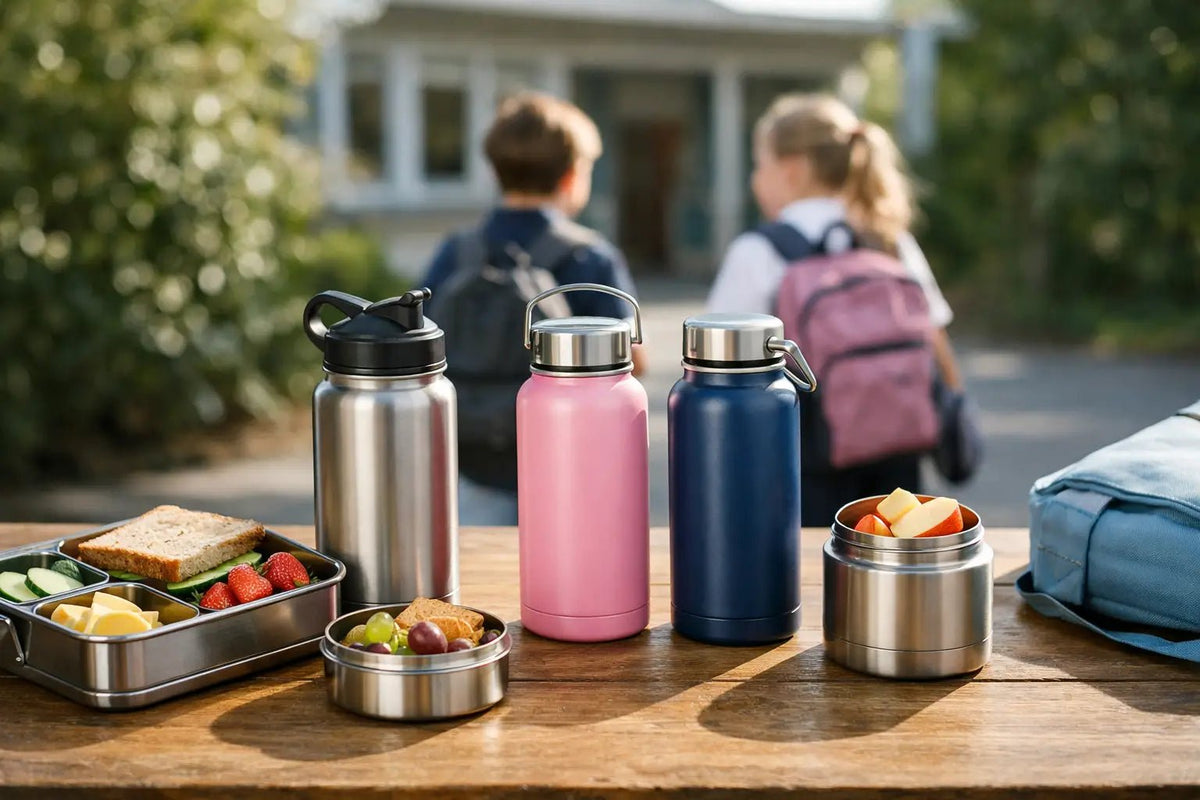
School drink bottles have a demanding job. They are opened with sticky hands, packed in a hurry and expected to survive the bottom of a bag all day. A good bottle should not demand special treatment to do its job.
Start with the body. Stainless steel is a sensible choice for everyday impact resistance. It can still mark or dent if it takes a particularly hard hit, but it is not prone to the same kind of cracking that can make a bottle unusable without warning. A small dent is often cosmetic. A crack can quickly become a leak.
Then consider the lid. The lid and seal are just as important as the bottle itself when leakproof performance is the goal. A well-designed screw-top or sports lid should close securely, be simple for children to use and come apart enough for proper cleaning. The best option depends on age: younger children may find a simple, easy-grip lid more manageable, while older children and active adults may prefer a faster drinking spout.
No bottle is leakproof if the lid is cross-threaded, the seal is missing or the top has not been properly closed. A quick check before packing takes seconds and can save a soaked reader or laptop later. It is also worth keeping the bottle upright where possible, especially if it has a straw-style lid.
The long-term value is in the details
A cheaper bottle can feel like a saving until it needs replacing halfway through the term. Long-term value is about the materials, construction and support behind the product, not only the price at checkout.
Look for a drink bottle with a food-grade stainless steel body, a secure lid and replacement parts where available. Check how the lid is cleaned and whether seals can be removed, washed and refitted easily. These small details are what keep a bottle pleasant to use rather than something left at the back of the cupboard.
It is also sensible to be precise about materials. A stainless steel bottle does not automatically mean every component is metal. Lids, seals, straws and carry loops may use other materials for comfort, flexibility or leakproof function. If reducing plastic exposure is a priority for your household, check the product specifications for the particular bottle rather than assuming every part is plastic-free.
Meals In Steel focuses on premium 304-grade stainless steel products designed for the realities of family life, including the daily school-bag test. A three-year warranty adds useful confidence when you are choosing an item intended to be used every day, not replaced after a few months.
Choosing the right bottle for your routine
The best capacity is the one your child or household member will actually carry and refill. A large bottle may suit a long sports day, but it can be awkward for a younger child or take up too much space next to lunch. For school, choose a size that fits comfortably in the bag pocket and is light enough when full. For work, travel or meal prep days, a larger capacity may reduce the need for refills.
Think about where the bottle will be used. For a desk, a simple screw lid can be a low-fuss choice. For sport or walking, easy one-handed access may be more useful. For younger children, avoid overly complicated mechanisms that can be difficult to clean or frustrating to close independently.
Insulation is another decision worth making deliberately. An insulated stainless steel bottle is helpful when you want water to stay cool through a warm day, during a summer road trip or beside the sports field. A single-wall stainless steel bottle can be a lighter, simpler choice for everyday water. Neither is automatically better. The right one depends on whether temperature control or lower carry weight matters more.
Colour and finish can also influence whether a bottle becomes a favourite. Children are more likely to bring home and use a bottle they can recognise easily. For families with several children, choosing different colours or adding a name label can prevent the familiar after-school debate over whose bottle is whose.
Keep a stainless steel drink bottle fresh
The easiest bottle to use is one that is easy to keep clean. Empty it at the end of the day, rinse it well and leave it open to air dry. This simple habit prevents stale smells and keeps the next morning's pack-up quicker.
For a deeper wash, use warm soapy water and a bottle brush that reaches the base. Pay close attention to the lid, drinking spout and seal, as these are the areas most likely to collect residue. If the seal is removable, take it out occasionally and wash beneath it before refitting it securely.
Avoid leaving sweet drinks, smoothies or milk-based drinks in any bottle for extended periods, particularly in warm conditions. Water is the easiest everyday choice. If you do use other drinks, wash the bottle promptly afterwards rather than relying on a quick rinse.
Dishwasher suitability varies by product, especially for lids, painted finishes and insulated designs. Follow the care instructions for your exact bottle. Handwashing may take a little more effort, but it can help preserve finishes and lid components over the long run.
A better choice is one you will keep using
The comparison between a drink bottle versus plastic bottle should not be about chasing perfection. It is about choosing a reliable everyday item that suits your family and avoids unnecessary replacement. A quality stainless steel bottle offers strength, a clean drinking experience and the confidence to pack it each morning without wondering whether it will make it home intact.
Choose a size and lid that fit the user, clean it regularly and look after the seal. Then let it do what a good drink bottle should do: make staying hydrated simple, wherever the day takes your family.


Leave a comment
This site is protected by hCaptcha and the hCaptcha Privacy Policy and Terms of Service apply.