
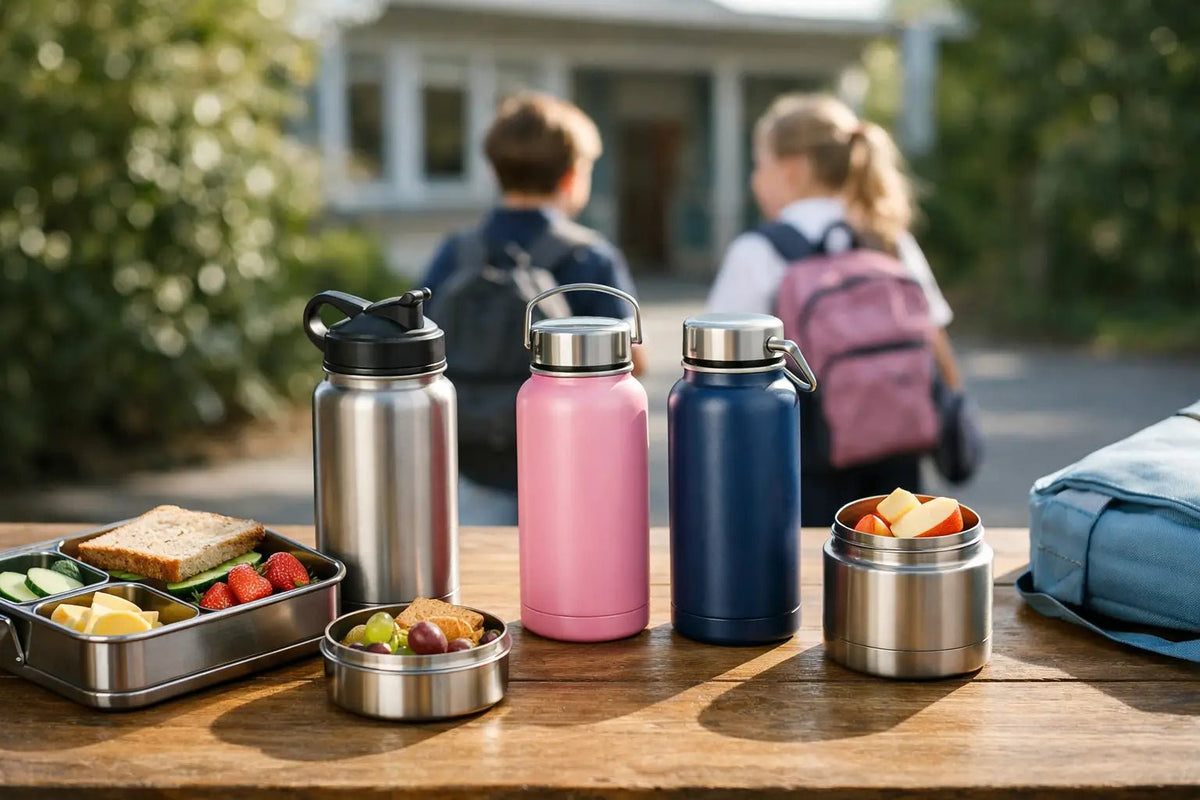
A drink bottle that comes home half-full because it is awkward to open, too heavy to carry or has leaked through the school bag is not making mornings easier. Knowing how to choose kids' drink bottles comes down to the details that matter after the lunch bell rings: the right size, a lid your child can manage, easy cleaning and materials made for daily use.
For most Australian families, the best bottle is not the one with the brightest print or the longest feature list. It is the one your child reaches for, can use independently and brings home intact at the end of a busy school day.
Start with the right bottle size
Size affects how likely your child is to drink enough, as well as how comfortably the bottle fits in their bag. A bottle that is too small may not last through school, sport and the trip home. One that is oversized can be heavy, especially once filled, and may take up valuable room beside lunchboxes, readers and a school jumper.
For younger primary school children, around 350 to 500 mL is often a practical starting point. It is lighter to carry and easier for smaller hands to hold. Older children, active kids and those heading to after-school sport may be better served by 600 to 750 mL, particularly during warmer months.
There is no single perfect capacity. Consider whether there is a reliable place to refill at school, how much outdoor play your child has, and whether they take a separate bottle to training. A manageable bottle that can be refilled is usually more useful than a huge one that stays in the bottom of the bag.
Choose stainless steel for long-term daily use
The material is one of the biggest decisions when choosing a kids' drink bottle. Premium 304-grade stainless steel is a dependable option for family life because it is strong, reusable and does not hold onto flavours the way some materials can. It also offers a practical way to reduce reliance on single-use drinks and short-lived plastic alternatives.
A quality stainless steel bottle is designed to handle the knocks of classroom floors, sports sidelines and the daily shuffle in and out of a school bag. While no bottle is indestructible, stainless steel is far less likely to crack from an everyday drop than many lightweight options.
If cold water is a priority, look at insulated stainless steel. Double-wall insulation helps keep water cooler for longer, which can make a real difference in a hot Australian summer or when the bottle sits in a bag until lunchtime. The trade-off is weight: insulated bottles are generally heavier than single-wall styles.
For children who need the lightest possible bottle, a non-insulated stainless steel option may suit better. For children who dislike warm water or spend long days outdoors, the extra weight of insulation is often worth it.
Check what touches the drink
Stainless steel may make up the bottle body, but lids, drinking spouts, straws and seals are often made from other food-safe materials. That is normal and can be necessary for a comfortable, leak-resistant drinking experience. Rather than assuming every part is steel, check the product details and choose a bottle with clearly stated materials and food-safe components.
Pick a lid your child can use without help
A leakproof lid is essential, but it must also be simple enough for your child to open, close and drink from independently. The best lid style depends on their age, coordination and drinking habits.
Younger children often find a straw lid or soft spout easy to use because they can sip without tipping the bottle. This is especially handy in the classroom, car or on the footpath after school. Look for a secure cover or closure that protects the mouthpiece when the bottle is packed away.
A screw-top lid is straightforward, durable and often easier to clean because there are fewer moving parts. It can be a good choice for older children who are comfortable tipping a bottle to drink. The catch is that some children will not fully tighten it after a refill, so it is worth practising at home before the first school day.
Flip-top and push-button lids can be convenient, but they have more components. They should feel solid, close firmly and be easy to inspect for crumbs or residue. A clever lid is only useful if it works consistently in small hands.
Before committing, ask a simple question: can my child open it, drink from it, close it and put it back in their bag without assistance? If the answer is no, choose a simpler style.
Prioritise genuine leakproof performance
Parents know that “spill-resistant” is not the same as leakproof. A drink bottle needs to stay sealed when it is lying sideways beside a lunchbox, tipped under a jumper or bumped around on the bus.
Look for a lid with a secure seal and a closure that clicks, screws or locks into place with clear resistance. A good seal should be removable for cleaning where the design allows, but it should also sit snugly in its groove. Loose or twisted seals are a common cause of leaks.
When the bottle arrives, test it before it goes to school. Fill it with water, close it properly and place it on its side over the sink or a tea towel for a few minutes. Then give it a gentle shake. This quick check lets you spot a lid that has not been assembled correctly and gives your child a chance to learn how it closes.
Do not overlook the bottle’s shape either. A slim, stable design is easier to slide into most school bag side pockets. If your child carries the bottle inside their bag, choose a profile that will not roll around and a lid designed for transport.
Make cleaning realistic, not aspirational
The bottle you can clean properly every day is the bottle your family will keep using. Wide-mouth bottles are generally easier to wash by hand because you can reach the inside with a bottle brush. They also make filling with ice easier, if that is part of your routine.
Straw lids and flip-top lids need more attention than a simple screw top. They can still be an excellent choice, but check that the straw, mouthpiece and seal can be taken apart or cleaned thoroughly according to the maker’s instructions. Hidden moisture and leftover drink can lead to unpleasant smells, particularly if the bottle has been used for anything other than water.
Water is the easiest everyday choice for a school bottle. If you occasionally pack milk, cordial or a smoothie, wash the bottle and all lid parts promptly afterwards. A quick rinse is not always enough around seals and straws.
Build bottle cleaning into the after-school routine: empty it, rinse it, leave it open to air dry and give the lid regular attention. This takes less time than trying to rescue a bottle that has been left closed and damp over the weekend.
Consider weight, grip and bag fit
Children do not judge a bottle by a specification sheet. They notice whether it is hard to hold, too bulky for the bag pocket or painful when it lands on their foot. Those practical details shape whether the bottle gets used.
A powder-coated finish can provide a more secure grip than a smooth exterior, especially for wet hands. A carry handle helps some children, but make sure it is sturdy and does not make the bottle awkward to pack. For younger kids, it can help to fill the bottle and let them carry it around the house before school starts.
Also measure the bag pocket if you are replacing an existing bottle. Diameter matters just as much as capacity. A bottle may hold the right amount of water but still be too wide for the spot where your child naturally carries it.
Choose a bottle built for the long haul
A cheap bottle that needs replacing after a term is rarely good value. Look for clear information about the grade of stainless steel, the quality of the lid and seals, available replacement parts where relevant, and a meaningful warranty. These are useful signs that a product is designed for repeated daily use rather than a short season.
Meals In Steel focuses on durable stainless steel food and drink storage made for real family routines, with a three-year warranty for added confidence. That matters when a bottle is expected to survive the school bag test five days a week.
The right bottle does not need to be complicated. Choose one that suits your child’s hands, their school day and your cleaning routine. When it stays leakproof, feels good to use and keeps showing up for school after school, it becomes one less thing to think about on a busy morning.


Leave a comment
This site is protected by hCaptcha and the hCaptcha Privacy Policy and Terms of Service apply.